
A few weeks ago, someone messaged me to weigh in on a debate concerning Alex Turner’s lyrics. The argument? That he’s never written a proper love song and only circled the topic of love through lust, longing, and the rush of pursuit. The claim is that love songs aren’t genuine if filled with sly, suggestive imagery and devoid of straight forward declarations of love.
I think it’s an empty argument, because it overlooks the many nuances that come with the intense emotion of love. However, I can understand where it arises from. None of his love songs contain the three universal words: I love you. The sentiments of love are usually mapped out through references and imagery.
My response? I believe Alex Turner has only written about love and its many forms. And no, this isn’t a naive adoration or me examining him with rose coloured glasses. As a cynic, I find his take on love multifaceted and relatable. He writes exposés of love, giving a visual meaning to our avoidance and detachment with love, while confronting the protagonists, himself or others.
I truly believe every Arctic Monkeys album is riddled with love letters. Written in thick haze, between light and dark, truth and illusion. They burn slowly, through the afterglow of nights you can’t quite remember, luring you back to private memories and late night conversations. And somewhere in the smoke, the exposé of love dares you to read between the lines.
To explain this, I’ll be looking at French philosopher, Roland Barthes and what he calls our Image-Repertoire.
BETWEEN THE LINES
“What we realized from ‘Do I Wanna Know?’ is it can be that simple. That tune reminded you that it was what you leave out sometimes” – Alex Turner, John Kennedy’s Track by Track.
The subject of ”love” and conveying love isn’t necessarily the main goal of a writer, musician, or poet, but its power seeps into writing, especially in music. What drives musicians to write about love? It’s a timeless question. Writing thrives on strong emotions, and love demands a writer’s skilled word play to express layered complexities accompanying love.
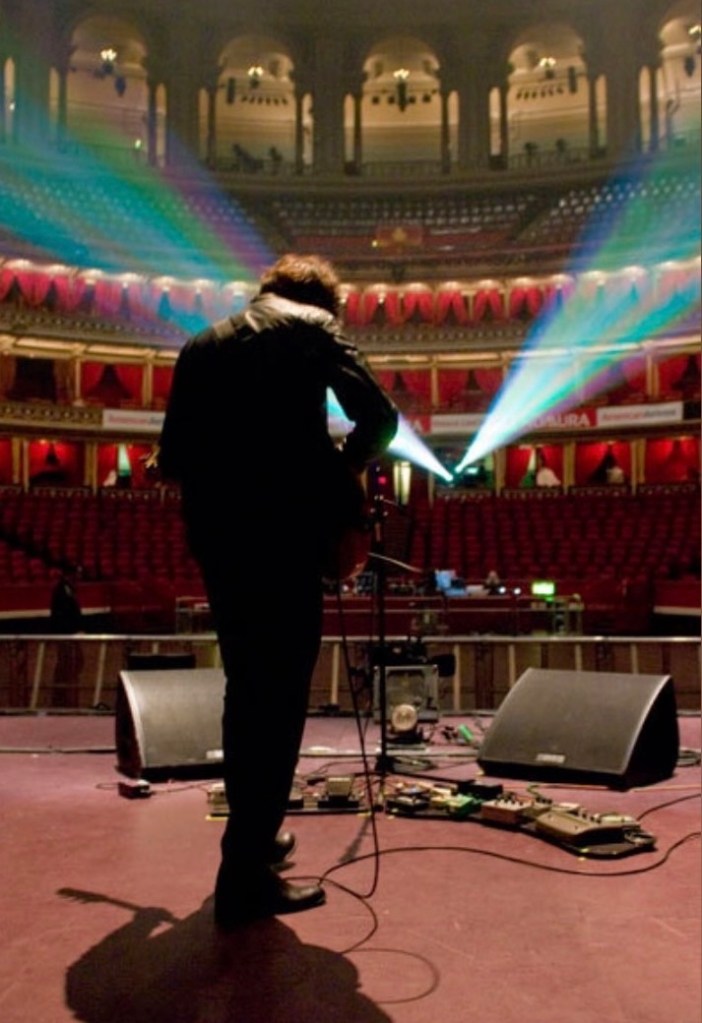
Writers often cloak their vulnerable feelings of love, heartache, isolation or politics through silence, and expressing them in less intimate words, or by hiding themselves within metaphors.
In music, love can simply find its home in the absence of words or the silence between notes. Love can be hidden in a rhythm and lyrical repetition. It’s up to the listener to feel the missing unspoken word. This comes with age, experience, and one’s own acceptance of vulnerability. The outcome will vary with each listener.
Few experiences feel as ecstatic, or devastating as love, so it becomes a natural fuel for poetry and writing. Writers use love as a held up mirror in their hand. It allows them to explore their own identity through its many layers. They write about it because it’s hard to express it, and we relate to it because it’s a universal drive for everything we set out to do.
Love is ambivalent. There are many complex emotions accompanying love, and through his visual writing, I strongly believe Alex Turner articulates a man navigating the recurring urgency of love against the landscape of ambiguous themes.
Roland Barthes
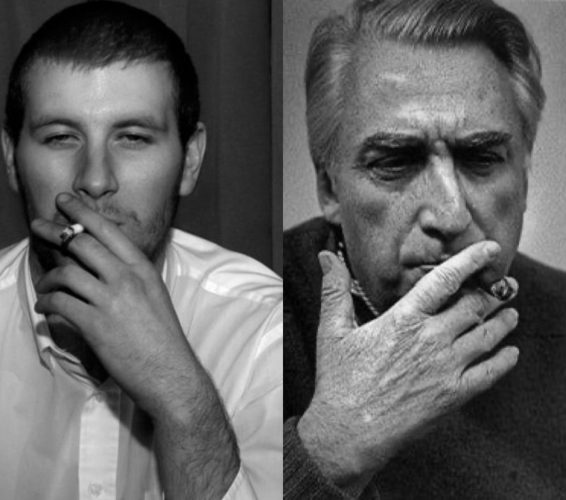
I recently landed on A Lover’s Discourse: Fragments, a book by Roland Barthes. It’s not a novel, but rather a dictionary made of “fragments,” with each fragment perfectly explaining what lovers experience when in love. Through the book, Barthes is not trying to provide one definition of love or write a theory about it like many philosophers before him. Instead, he’s treating love like a language.
Simply, the object of the book is to explain love through the inner monologue and outward conversation of someone in love. It’s less about defining love and more about writing how it “feels” to be in love.
The book is divided into 80 fragments that explore moments in a lover’s perspective. Flipping though it felt like reading a complex dictionary. Each fragment is given a title like “jealousy,” “adorable,” “waiting,” “I love you,“ “embrace,” and many more. The fragments are not in order of how we fall in love. The book doesn’t follow a love story from start to end because love is not meant to be linear. It’s experienced through moments of ecstasy to moments of complete despair. One minute you’re in love and the next you’re in tears.
The book is a scattered dictionary of love and its many descriptions. Each fragment captures a moment or a conversation between lovers that can happen throughout their encounter at any given time. This reflects the chaos of being in love. At times the fragments contradict each other as well, perfectly conveying the ups and downs of relationships. Each fragment contains the author’s own reflection on the subject. He also includes snippets from literary references, and other philosophers’ perspectives through time on the subject of love.
IMAGE-REPERTOIRE
Barthes explores many key themes to structure the fragments and give some flow to the book, but the one I think ties into writing music, specifically the visual writing of Alex Turner, is the theme of Image-Repertoire.
What is an Image-Repertoire? It’s a collection of images. Imagine your own version of a Pinterest board made of images and concepts you collected over the years. Each image represents your idea of what love is.
Barthes explains how we borrow images from movies, music, books, and the people around us. We save movie quotes attached onto black and white French films, associate a kiss in the rain to cheesy rom-com moments, Etta James to weddings and the first dance.
We collect them and associate them to concepts of love, romanticizing it. We’ve been collecting a library of love images that shape our idea of it since childhood.
Alex Turner’s writing is a public Image-Repertoire. He doesn’t need to join social media to give us a peek into his world. We have his collection of images in the form of music.
Every album contains a few love letters out of his own Image-Repertoire. Some are easy to spot and not very subtle, and others are hidden within metaphors or feelings accompanying love, like resentment or ridicule (Take You Home). He presents some as a contradictory scenario, to express the longing of a feeling or of someone. To express love and the feeling of falling in and out of love. And we in turn understand his library of images through our own personal Image-Repertoire.
Aside from the loud and apparent longing on the AM album, I’ve found various forms or fragments of love pouring out of all albums:
The hasty lust often presented as “love at first sight” on Whatever People Say I Am, That’s What I’m Not. The heartbroken and fragile ego on Favourite Worst Nightmare. The spiraling, on-the-back-burner of an overpowering lover on Humbug. The vulnerable confessions of a lovesick fool on Suck it and See. The concept of detachment and mourning love of self in a deceptive world on Tranquility Base Hotel and Casino, and the nostalgic contemplation of love on The Car. The emotions expressed on all seven albums are driven by multiple fragments of love, his own images and concepts collected over the years.
LUST VS LOVE
Love can include lust, but doesn’t depend on it. In philosophy, lust is nature’s way of initially hooking us into union, and can deepen into meaningful love over time.
Plato explained Eros as the initial desire between two people. But what starts off as physical, erotic, lustful, isn’t necessarily doomed. He explains how physical attraction can climb a ladder leading to appreciation of beauty itself, and ultimately to something eternal. It’s an uphill climb starting at the most animal.
Physical attraction is the first glance, being struck by Cupid’s arrow, and it leaves a lingering powerful impression. The initial attraction is the story most couples remember vividly. Ask anyone the moment they met someone and fell in love, they’ll remember it in great detail with features like, “her dress,” “his smile,” “she looked like an angel,” “he made my heart beat.” It’s often expressed as an initial physical attraction.
Those feelings conjure the most striking lyrics. So yes, some of the lyrics may seem superficial and lustful, but shouldn’t dismiss the value of how deep that connection is or can be. Heartaches and breakups are also significant factors of real love experienced, otherwise he wouldn’t care to write about moving on with There’d Better Be A Mirrorball or the protagonist begging to be absolved in Do Me A Favour.
I LOVE YOU
Some of his lyrics are not meant for us to be understood or analyzed. They’re riddled with his own idiosyncrasies. They could also be a reflection or an inside quip between him and his partner, which is equivalent to some of the fragment of love shared by Barthes.
No matter the reason, the songs that stand out to the audience and linger are filled with attributes of love, fragments found in the book. Recurring themes that entice us, like anguish, affirmation, lust, and the chase. And maybe that reflects more of us, longing to be adored by a lover, than the writer who’s simply expressing what the lover can’t put into words.
From the drunken confession on the debut album (When she’s pressed the star after she’s pressed unlock. And there’s verse and chapter sat in her inbox), to the atonement of one’s role towards a pending end (If that’s what it takes to say, “good night), the lyrics may not mirror the listener’s Image-Repertoire or necessarily reflect the expectations of what the societal construct of love looks like, but they are without a doubt a declaration of love.
The book’s description of saying the words I love you is not placed in priority or in order. It is simply treated like all the other fragments. Barthes compares saying the three words to a mantra, a ritual. Three rhythmic words that don’t carry the accurate weight of being in love.
Barthes claims the phrase is “empty and full at once.” It is empty because it doesn’t describe anything concrete or capture all the feelings of love. It is also full because it can’t carry the weight of love. Barthes compares this to a musical refrain, “it never resolves, it just goes on.”
In fact, he believes writing music about love without saying those three words is purer because, “the emotion is real.”
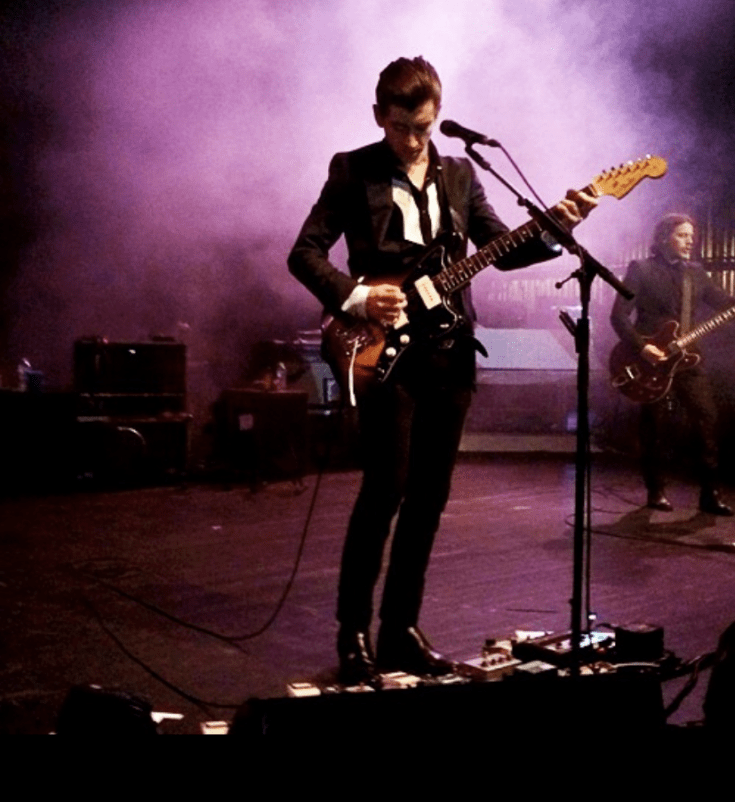
Most of the love songs Alex Turner has written over the years, whether they’re obviously a love song or a bowl of mixed metaphors, express those three words through the unsaid. The declaration of love is found in the many fragments expressing the language of love. They’re also found in the melody, the repetition, and the silence between notes. He allows the emotion to exist between the notes, just as Barthes explains, “love exists between words.”
I leave you with this snippet from Alex Turner which captures this beautifully. This is from an interview with Vulture in 2018 which he reiterates to Jools Holland in 2022:
“For me, it’s the sound of the music I write that leads the way and helps suggest the words. The melody is what makes you commit to saying shit. Some people think that writing words just to fit a melodic idea makes those words meaningless, but I think the opposite is true. There’s a line in Leon Russell’s ‘A Song for You,’ one of the greatest songs of all time: ‘If my words don’t come together / Just listen to the melody for my love’s in there hiding.’ That makes a lot of sense to me.”
 SPANGLED CAVERN
You must be logged in to post a comment.