
“Well, I remember I must have been like twelve years old or something, and hearing “I Am the Walrus” and thinking, “Well, this is just nonsense. I could write something like this, surely.” And sort of attempting to write in that style and really struggling with it. I distinctly remember getting aggravated because it’s like, “Well, he’s singing about custard and a cob sitting on a cornflake and why can’t I think of that?”[Laughs] And I still can’t do that exactly.” – Alex Turner
The other day I was reading a random passage from Lewis Carroll’s novel, Alice’s Adventures in Wonderland. I couldn’t shake the feeling of a familiar narrative. I thought I was going as mad as Alice when I realized every chapter of the novel aligns perfectly with songs off Arctic Monkeys’ third album, Humbug.
No, really. Every chapter aligns perfectly with a song off the album, and in order.
As a side by side comparison, it aligns narratively. As a whole, both Wonderland and Humbug share similar themes and central figures, while simultaneously rejecting precise meaning. In short, they share an ambitious quest into the nothingness, which may explain their genius credibility and timeless value.
In a 2009 interview with John Kennedy, Alex Turner was asked about the name Humbug and whether it related to the hard candy. He answered with, “when you suck a Humbug, do the stripes disappear? Because that’s almost it.” In short, Humbug is an album riddled in hidden messages. It’s an album of gradual revelations. And unlike the first two, I believe this album unveils the mask of the artist behind the craft.

Cryptic language is the hardest to navigate, but the easiest to mask yourself within. And we would see Alex conceal himself again in the worlds of Tranquility Base Hotel and Casino, and The Car.
Wonderland, land of wonder, also has many synonyms. Dreamland and utopia are the most parallel to Humbug’s empirical philosophy.
There is however one difference between Wonderland and Humbug. Wonderland is the subconscious state of Alice. Humbug exists in the conscious realm. I’ve discussed in my previous article the overall empirical nature of Humbug. The protagonist in Humbug is tuned into himself and his senses. He’s guided by them to seek answers.
Before I do a comparative analysis of each chapter and song, let’s look at a few key points: Meaning, structure, central figures, and themes.
MEANING
Wonderland and Humbug simply do not carry one objective lesson, one interpretation. Lewis Carroll’s novel received a lot of criticism because he purposely wrote a story that wasn’t centered on an objective moral or lesson. There is no definite interpretation for the story. He wrote it for the purpose of storytelling. But that hasn’t stopped anyone from theorizing. I read various interpretations of Wonderland, from the growing pains of a girl, a metaphor for lost innocence, to the cruelty of the monarchy and the need for rules and order in society.
However, critics agree the novel is a product of Literary Nonsense.
Similarly, Humbug is the turning point for the band. A lot of fans were frustrated by the new sound. Much like the world of Wonderland, Humbug is not focused on finding one objective path to the torch of truth, it’s about storytelling and surrendering to the absurdity of the world conjured through playful wording. This ambitious curiosity echoes throughout both Wonderland and Humbug.
STRUCTURE
Lewis Carroll begins with Alice falling asleep next to her sister under a tree in the garden. Before she falls asleep, she looks over her sister’s book and says: “What is the use of a book without pictures or conversations?” The beginning gave us an indication of the contradictions Alice would face throughout the novel. Even though passage of time and movement pushed the story forward, Alice is only dreaming, so she’s not moving. It starts and ends with her physically remaining under the tree. The end is therefore the beginning.
In the first chapter we are also introduced to Alice’s anchor to reality, her cat Dinah. Anytime she refers to her, Wonderland’s creatures react with fear and discomfort. To me that illustrates Alice’s inability to fully disassociate from the real world. It’s almost like when you’re aware of your own dream as you navigate through it.
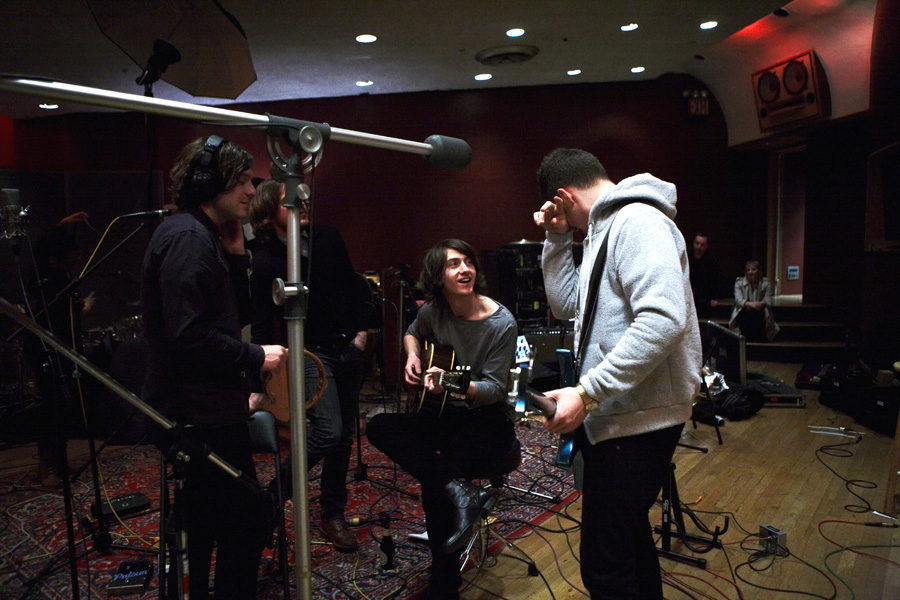
While being interviewed by John Kennedy in 2009, Alex confirmed he wrote the final track of Humbug, The Jeweller’s Hands, before the band started recording the album: “The Jeweller’s Hands and Catapult were the only tunes that had a central figure, this character of wisdom. The song seemed finite.” He wrote the ending of the album first. Like the structure of Alice’s Adventures in Wonderland, the end is also the beginning.
THE IMPORTANCE OF THE JEWELLER’S HANDS
A while back, I wrote an in-depth analysis comparing Tranquility Base Hotel and Casino to Humbug. The Jeweller’s Hands served to be the link between the empirical world and the lunar universe. Once again, I find this song to hold all the key parallels to another world: Wonderland. And considering he wrote this song prior to the production of the album, I can assume he used it as a blueprint to navigate the recurring themes. He worked backwards, working his way up from end to beginning. Words like mirrors, logic, sinking stone (Alice falling), grinning (like the Cheshire Cat), imagination, house of cards, are just a few clues found in the song.
In that article I also discussed how The Jeweller is the oracle of the empirical world of Humbug. I believe the Cheshire Cat is its equivalent in Wonderland. Both the Cheshire Cat and The Jeweller are central figures, gate keepers. They’re also aware of their roles in the dream-like worlds. Their intention however is unclear.
I will discuss the song along with the rest of the lyrics on the album, later on in detail.
THEMES
Even though the message is open for interpretation, I found there are 3 major themes that shape both Wonderland and Humbug: Nonsense (the absurd), Time (growth and metamorphosis), and Ingestion (figurative and literal).
For this article, I’ll give you my personal understanding. I believe the meaning for Wonderland and Humbug is found in the lack of any meaning at all. Protagonists in both worlds search for answers in a landscape of satire, wordplay, illogic, and puzzles. They combine pieces of the puzzle to tell fragments of stories, but there is no clear resolution.
Personally I find there is comfort in the lack of an objective answer. For me, it reassures me of my own path, of living in periods of self doubt, for not having everything consistently in order, for being imperfect. In the age we live in today, a slight dose of Optimistic Nihilism is better than the facade of exhausting false positivity, masking truth.
I also sense an alarming tone alluding to a nearby threat in the narrative of the novel and in the musical arrangements of the songs. The comfort in that threat is that it’s internal, so it can be defeated. It’s not a tangible threat. Even Alice discovers the external threats in Wonderland are non existent when she yells out, “you’re nothing but a pack of cards.” These worlds of chaos and nonsense grant us peace by letting us ride the wave of the narrative wherever it may lead, rather than push against it. We are our own obstacles.
NONSENSE (THE ABSURD)
“Only a few find the way, some don’t recognize it when they do – some… don’t ever want to”
Alice’s Adventures in Wonderland is categorized as nonsense literature. It’s based on neologism, puns, playful language, and satire. And to understand the world of Wonderland, Alice must accept the logic of nonsense.
The logic of nonsense can also be attributed to the psychedelic lyrics found in Humbug. In 2009 Alex Turner was asked about the meaning behind the lyrics of Humbug and he said the following:
“It is a device on this album for us—to still have a kind of a question mark when you are standing on stage playing. I feel like with these songs I almost wanted to kind of leave that there a little bit so I could try and figure them out over the time we have been out playing. I mean, you still want to be the I am The Walrus every now and again.”
TIME (GROWTH & METAMORPHOSIS)
I personally find Humbug’s lyrics change every time I revisit it, revealing new meaning, storylines, and evoking a mix of emotions. This goes back to what Alex mentioned about the candy stripes fading. The album is riddled with self revelations.
Arctic Monkeys satisfy their curiosity by taking a leap of faith into a new sound, a departure from their youth. Likewise, Alice falls into the unknown full of childlike curiosity. She is faced with an imaginative world without order, contradicting her childhood wonder with the urgency of adulthood. She’s constantly returning to the door leading to the garden. And I should mention, doors in dreams are a symbol of metamorphosis and transition.
INGESTION (LITERAL & FIGURATIVE)
Creatures in Wonderland face various consequences every time they eat or drink. Lewis Carroll’s writing of sustenance highlights the grim reality of the time. He channeled his fear of food shortage through Alice’s height and weight changes. Other critics believe it was a metaphor of puberty and her departure from childhood.
Personally, I believe in both Wonderland and Humbug, the idea of ingestion is a metaphor. There are two definitions to the word ingestion: swallowing, and the process of absorbing information. Both definitions apply to Wonderland and Humbug but I believe in the latter, the symbolic gesture of absorbing information. It’s the quest of Alice and the protagonist in Humbug, collecting information, and relying on their senses and intuition.
Ingestion also comes with a warning: what we take in shapes both the revelations of the journey and our identity. In Humbug, “food” or “brain fuel” is represented in the form of the various mind altering stimulants mentioned. The hard to miss references are easily found in My Propeller, Potion Approaching, and Fire And The Thud.
Another interesting pattern I noticed is in the “love interest” he’s addressing. Humbug’s love interest, “she”, is not a woman. She’s the stimulant leading him down the rabbit hole. She unlocks his deepest desires while concealing his vulnerabilities. The parallel is found in the sustenance of Wonderland and in the personification of Time. Time is a character in Wonderland.
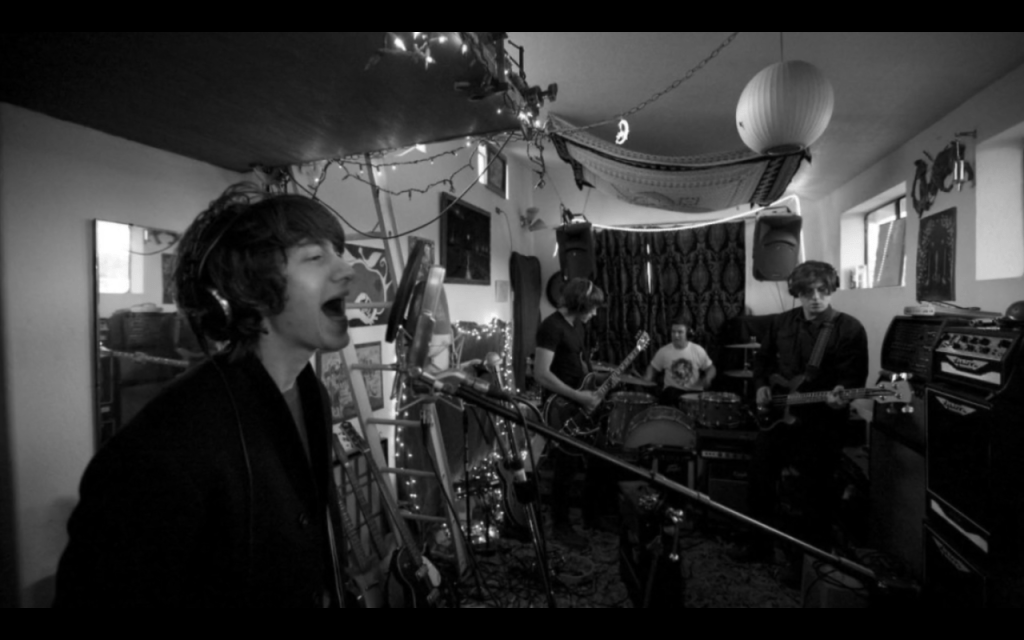
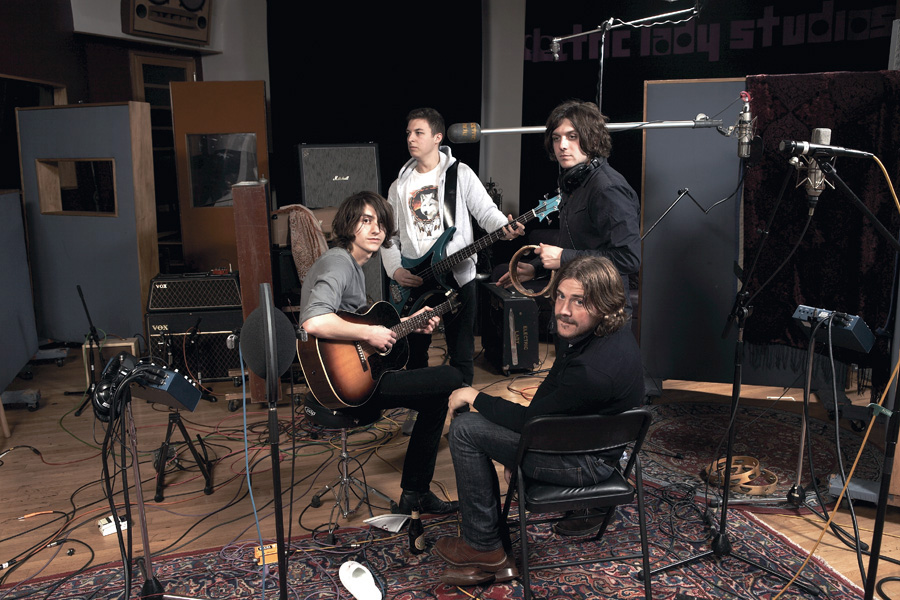
In the same interview with John Kennedy, Alex jokes about the recording session in the Rancho De La Luna home, where some equipment was placed in a dining room setting. He phrases the process as sonic hunger. To me that parallels Alice’s curiosity in consuming her findings.

CHAPTER 1: Down The Rabbit Hole
TRACK 1: My Propeller
“…and burning with curiosity, she ran across the field after it, and fortunately was just in time to see it pop down a large rabbit-hole under the hedge.”
The White Rabbit is in a hurry, he’s late. The concept of time and urgency is evident throughout the novel. This recurring image of the White Rabbit mirrors the anxiety in the repeating chorus line, “when are you arriving?”, and even in the lyric of the opening verse, “can’t hold down the urgency.” The quests of both Wonderland and Humbug are time sensitive. This uneasy inkling confirms the illusion of both worlds.
When Alice sees the White Rabbit, her mind begins to reel like a propeller. Her curiosity pushes her to follow the White Rabbit, where she inevitably falls into the rabbit hole. As Alice sinks into the hole, we get a glimpse of her inner dialogue. I believe this image also represents her falling within. In the dialogue, she tries to reason with herself.
“Down down down, would she ever stop falling?” She was falling slowly.
The pace of her fall defies logic. That’s the first clue we receive of the dream-like wonder of this foreign land. Entering Wonderland ignites the quest.
Humbug kicks off with My Propeller. It signals not only a departure from the sound of the previous albums, it also gives us a peek into the inner dialogue of the artist behind the lyrics. The protagonist falls deeper into himself. Alice’s sinking feeling is matched in the lyric, “you’ve got to make your descent slowly”.
With a peek behind a curtain, Alice sees the garden through a tiny door: “I’d like to be out there, not in this dark room.” She’s seduced by this utopian paradise, even though she knows nothing of it. On the table, she finds a key next to a bottle with a label that reads “drink me”. At this point, Alice hasn’t ventured far off into the dreamland. She’s still aware of the regulations and rules governing reality and even judges other children who drink and eat without thinking first:
“the simple rules”. but the wise little Alice was not going to do that in a hurry. “No, I’ll look first,”she said, “and see whether it’s marked “poison” or not”.
Eventually she drinks the potion, understanding that consuming things in Wonderland can lead towards the garden. Immediately she shrinks and is met with her first consequence from consuming without thought: she’s too small to reach the key she left on the table.
This is mirrored in the lyrics: “It’s a necessary evil. No cause for emergency. Borrowed the beak of a bald eagle. Oh, momentary synergy”.
The stimulant in My Propeller is necessary to start his inward journey, to arrive at meaning and truth. He even brushes off the warning label. However, this momentary euphoria could also veil reality. There’s a warning embedded within the song, similar to Alice’s reference to poison.
The transition between the first two chapters of the novel is where Alice throws logic out the window. She finds herself too small to reach the key so she pouts, cries and even scolds herself for her childish ways. Instead of turning to reason, she finds cake under the table and eats it without thinking: “and if it makes me grow smaller, I can creep under the door; so either way I’ll get into the garden, and I don’t care which happens!”
This is similar to the tone of the chorus in My Propeller. The protagonist believes he’s reliant on a stimulant to push him forward. He throws his conditioned beliefs and reason out the window and relies heavily on pure empirical findings.
CHAPTER 2: The Pool of Tears
TRACK 2: Crying Lightning
The similarity between the chapter and the song is too obvious: it’s all about crocodile tears. Alice pouts and cries like a child hoping to resolve her issues. Likewise, the love interest in Crying Lightning is a deceitful, childish, and somewhat dangerous woman, who puffs her chest out and crosses her arms when faced with criticism. But even in this case, I still believe this pouty woman is a stimulant that’s unreliable, unpredictable.
“You ought to be ashamed of yourself,” said Alice, “a great girl like you, to go on crying in this way! Stop this moment, I tell you!”. The way Alice scolds herself mirrors the way the protagonist in Crying Lightning speaks of his love interest’s manipulative ways.
Another shared similarity is the crisis of identity both Alice and the protagonist of Humbug face. In the pool of her own tears and in the now obvious absurdity of Wonderland, Alice questions who she is:
“Did I change in the night? Am I a different person today? But if I’m a different person, then the next question is, who am I? That’s the mystery. Who am I then? Tell me that first, and then, if I like being that person, I’ll come up: if not, I’ll stay down here till I’m somebody else”–but, oh dear!” cried Alice, with a sudden burst of tears, “I do wish they would put their heads down! I am so very tired of being all alone here!”
This is similar to the lyrics: “ The next time that I caught my own reflection, it was on its way to meet you, thinking of excuses to postpone. You never looked like yourself from the side, but your profile could not hide, the fact you knew I was approaching your throne.”
In the water, Alice finds herself divided between reasoning with herself and scolding herself for crying. The protagonist in Humbug tries to reason with himself to stay away from a woman who “tricks him”, who’s sour towards him. He catches himself returning back to her and is aware of the inevitable pain she’ll cause him.
Personally I found the backdrop story of Crying Lightning to be more revealing. During the interview with John Kennedy, Alex and Matt mention a night where Jamie disappeared into the desert, only to return a day after wearing a poncho covered in pink dust. He came to them with what the band jokingly described as a “desert vision” regarding the sound of Crying Lightning. In the same interview, Alex mentions excluding a monologue from the song which he originally wrote. The monologue was translated into Spanish, but it never made it onto the album.
Desert visions? The mysticism of Joshua Tree? Pink dust? Spanish monologues? It’s no wonder Alex used the words “Cracker Factory”, to introduce the song. A cracker factory is an insane asylum, a mad house. The most famous quote in Alice’s Adventures in Wonderland is, “We’re all mad here. I’m mad. You’re mad.”
And that is further reflected in this chapter, where Alice cries a pool of tears, swims in them, meets a talking mouse in the water, and speaks French to it.
CHAPTER 3: A Caucus Race and a Long Tale
TRACK 3: Dangerous Animals
Note: in a previous social media post, I compared Dangerous Animals to the exact plot of Nietzsche’s , Thus Spoke Zarathustra. But for this article, I will explore the bizarre parallels I found to Alice’s Adventures in Wonderland.
Making their way out of the pool of tears, Alice finds herself on land with a group of animals: a duck, lory, eaglet, dodo, and the mouse. Everyone gathers to hear the mouse’s story, including Alice who has given into her now new strange role in Wonderland, a submissive one.
Personally I think the mouse’s presence is domineering. We see this towards the end of the chapter when the mouse storms away refusing to finish the story and Alice begs him to continue.
Her pleading with the mouse is similar to the domineering “dangerous animal”, the love interest, described in Humbug: “The way you keep me in pursuit. Sharpen the heel of your boot. And you press it to my chest and you make me wheeze. Then to my knees you do promote me.”
The push and pull between the submissive and the dominating is sonically present in the “sonar ping” sound in Dangerous Animals. It signals a warning. This sound is used again in Dance Little Liar, and later on during the Tranquility Base Hotel and Casino tour.
In Wonderland, the warning signal is illustrated in the absurd word play, the further Alice sinks into her subconscious: “Speak English!’ said the Eaglet. “I don’t know the meaning of half those long words, and, what’s more, I don’t believe you do either!”
The lurking threat in the novel is represented by Alice’s cat, Dinah. The mere mention of her terrorizes the creatures of Wonderland. And because I believe Dinah to be the anchor to the real world, I can conclude her presence is also a figurative threat. She can present reason in a world run on chaos, dismantling it. Dinah is a threat to Wonderland. She’s real, not a fragment of imagination.
The figurative and literal parallel is best illustrated in these lyrics: “She makes my head pirouette. More than I would be willing to confess. D-A-N-G-E-R-O-U-S. D-A-N-G-E-R-O-U-S. The most unsuitable pet. It’s been long enough now so let’s. Make a mess, lioness.”
Alex writes the commanding woman as an overwhelming thought threatening his sanity, and as an animal who can annihilate him. And just like Alice, the protagonist in Humbug keeps submitting to the threats, delighting his curiosity.
Still wet from the pool of tears, the animals decide to dry off by participating in a race. Alice quickly learns the race makes no sense, as it has no beginning or end, no winners, and is formed in a circle. This “dance” resembles tribal dances, which are performed within circles, around a fire. The image of the foreign creatures “divided into teams”, resurfaces in a later chapter, The Lobster Quadrille.
Which brings me to the most accurate parallel I found between this song and chapter: “About as bashful as a tribal dance. The first and final chance. And of course the audience, of frighteners and fiends. Divided up into two teams.”
The hostility Alice faces from the creatures of Wonderland grows stronger as she sinks deeper in. The concept of “fiends” returns in The Jeweller’s Hands coinciding with its appropriate chapter.
CHAPTER 4: The Rabbit Sends in a Little Bill
TRACK 4: Secret Door
In the rabbit hole, Alice is confronted with many “doors”, a metaphor of choice and metamorphosis. Personally I think the hidden door Alice finds behind the curtain, perfectly aligns with Humbug’s Secret Door. Although the lyrics don’t literally coincide with the title, I thought the reference to a secret door was too specific to ignore. Even more bizarre is the placement of the song on the album. This chapter brings us back to the White Rabbit’s house.
After drinking a bottle near the looking glass, Alice rapidly grows. Her limbs break through the windows and roof. Reading this chapter I felt claustrophobic. Alice is trapped, and her confinement isn’t just physical. She is trapped in her mind:
“Oh, you foolish Alice!” she answered herself. “How can you learn lessons here? Why, there’s hardly room for you, and no room at all for any lesson-books!”
This mirrors the lyrics: “There’s absolutely nothing for us here”, and “How could such a creature survive in such a habitat?” The protagonist in Secret Door finds no value in the forced obligations that come with celebrity status. He’s in awe of the confidence his love interest exudes dealing with the downfall of limelight, but he would much rather escape the prying eyes.
Again, I don’t think his love interest is a person. He finds comfort in the confidence the stimulant gives him. He personifies the substance that allows him to see past the madness. To be at ease while the world caves in on him.
Alice’s rapid growth in the house can also illustrate her outgrowing the current situation. This theme is also conveyed in Secret Door. The protagonist is bombarded by the press, “fools on parade”. He’s trying to conceal himself, refusing to be on display.
“Fools on parade cavort and carry on for waiting eyes, that you would rather be beside than in front of”. He is living in confinement and can’t escape the image others have created of him. Just like Wonderland, Humbug is submerged in illusions. Alice finds herself unable to escape the facade as well. She continues saying, “you know, this sort of life! I do wonder what can have happened to me! When I used to read fairy-tales, I fancied that kind of thing never happened, and now here I am in the middle of one!”
This realization is mirrored in Secret Door. The protagonist, with the help of his love interest (stimulant), becomes aware of the sacrifices he must make in the facade of the glamorous world he finds himself thrown into. These lyrics convey regret and acceptance, “It’s better than to get a reputation as a miserable little tyke. At least that’s the conclusion she came to in this overture.”
Throughout the novel, Alice is met with recurring hostility from creatures in Wonderland. While expanding in size in the White Rabbit’s house, they turn on her. To me this also symbolizes the idea of being in a bubble about to burst, which is similar to the protagonist’s relationship with the media in Secret Door.
CHAPTER 5: Advice from a Caterpillar
TRACK 5: Potion Approaching
Wordplay, identity crisis, sinking deeper, and phallic symbols! The fact that chapter five and song five on the album follow the same narrative, further strengthens my comparison theories. In fact, I call this Wonderland chapter, Portion Control. Wordplay intended.
Literary Nonsense is the dominant style of Wonderland. This unfiltered confabulation and syllabary Jenga powers through Humbug as well. Potion Approaching starts off with a stimulant making its way through the protagonist’s bloodstream, which turns into a narrative of sexual overtones:
Until the bumps woke me up in your grip
And the tide took me to your mouth
And then swept me back down to your palms
Personally, I think this is another case of the artist masking his experience of a mind altering substance in a jumble of metaphors. This crude imagery is deliberately blunt to distract us from the vulnerability of his experience.
Many interpretations of the novel suggest Alice’s journey into adolescence include confrontation of her sexuality. The tone of the caterpillar is judgmental, condescending, and consistently confusing. Some believe this is a metaphor of growing pains. I think it’s a direct lesson in absorbing information and coming to terms with who she is. The caterpillar persistently asks Alice, “who are you?”
The caterpillar’s circular speech makes Alice impatient. Forcing her to recite a poem about moderation highlights the importance of portion control. He further suggests she take a bite of the mushroom: “One side will make you grow taller, and the other side will make you grow shorter.”
I believe the mushroom represents her new found knowledge, a navigation tool through Wonderland. She’s learning, growing, accepting that she must experience this nonsense world to find her way out. But she’s still struggling to know herself. This is also mirrored in the following lyrics:
Potion approaching
Shield your eyes
Potion approaching
Visualize
Holding a token
Swollen in size
The protagonist in Portion Approaching has to ironically hide in the illusions and psychedelic revelation of the stimulants to truly see reality for what it is. Like Alice, he must accept the absurd world of his altered visions to arrive at meaning. His eyes and limbs are swollen in size, a side effect of the stimulant and a phallic play on words to distract the listener.
Alice holds the token in her hands, two pieces of the mushroom. She’s learning to control her indulgence, choosing what to consume:
“after a while she remembered that she still held the pieces of mushroom in her hands, and she set to work very carefully, nibbling first at one and then at the other, and growing sometimes taller and sometimes shorter, until she had succeeded in bringing herself down to her usual height”
The lyrics, “yours is the only ocean, I wanna swing from, yours is the only ocean, I wanna hang on” can easily translate as a direct confession to the allure of the stimulant. I believe the ego mechanic is the mistress. He is having an internal affair in his mind, with this stimulant. And just like in Dangerous Animals, he’s a slave to her seduction. He’s submissive to her. He visits her while under the influence and only breaks away from her when reality strikes further down the album.
Sinking into the ocean is also found in the parallel of Alice diving deeper into her subconscious, submitting to Wonderland. The lyric “I wanna swing from”, is mirrored in a humorous way in this chapter. Alice’s neck grows taller into the forest trees, much like a monkey swinging along the branches.
CHAPTER 6: Pig and Pepper
TRACK 6: Fire and the Thud
Dichotomy is found in the two characters Alice meets. The Frog Footman and The Duchess. Their only shared value is the rejection of social norms.
This duality is equally found in the love confession of Fire and The Thud.
In 2009 Alex Turner confirmed he’d written it as a love song: “the song keeps revealing things. It is a love song. Initially I wrote it for someone else to sing, and my plan was to hide behind someone else.”
Fire and The Thud, and Cornerstone may be the only songs on the album referencing real women. However, he’s reflecting on them under the influence of the mistress of Humbug, the stimulant.
Personally I feel this song is about a love that never took off. He quietly pined for her, but it never developed beyond his longing. And now as they meet again, his feelings are reignited yet he’s treading, unsure of how she feels.
It’s an unconventional love song. It rejects the norms of a typical love story.
“As the concentration continually breaks”. After being reunited with her, he finds himself drifting in and out of memories. And even though his feelings are clearly still there, the memories of the pain he experienced the first time losing her, leave him seated on the fence: “I did request the mark you cast, didn’t heal as fast. I hear your voice in silences. Will the teasing of the fire be followed by the thud?” He accepts the self-inflicted pain and the residual scar of doomed romance. But can he throw himself back into the absurdity of love? Will he repeat the nonsense cycle?
Concerning the book, this chapter and the characters Alice meets convey her need to accept illogic as the only form of sound communication in Wonderland. She has to accept the contradiction to find the garden at the end of Wonderland.
This same parallel is found in the lyric, “And there’s a sharpened explanation. But there’s no screaming reason to inquire”. He tries to find reason in love, but seldom are emotions sound. The saying does go “falling madly in love” after all. Falling in love mirrors the chemical reaction found in addicts.
So will he repeat the cycle? Will Alice accept madness as order?
Towards the end of the song he accepts the inevitable pain and the delusion of love. Personally I believe the last lyric is him addressing his inner voice, fighting off his clashing senses: “I’d like to poke them in their prying eyes with things they never see if it smacked them in their temples.” The key word is temple. The temporal lobe is associated with episodic memories. It decodes visuals, forms memories, controls the unconscious, and our reactions to appetite and thirst. All themes Alice faces in Wonderland.
Much like Alice, he’s trapped in his mind, trying to rationalize fantasy. This is illustrated in this chapter when Alice meets the Cheshire Cat:
“But I don’t want to go among mad people,” Alice remarked.
“Oh, you can’t help that, “said the Cat: “we’re all mad here. I’m mad. You’re mad.”
“How do you know I’m mad?” said Alice.
“You must be,” said the Cat, “or you wouldn’t have come here.”

CHAPTER 7: A Mad Tea Party
TRACK 7: Cornerstone
Without a doubt, the most notable encounter in the novel. In this chapter we see a shift in Alice’s reaction to the dream world. It’s also the most humorous. Similarly, Cornerstone stands out from the rest of the tracks on the albums, not only sonically, but also because of its humorous tone. There is also a resonating sound on this track that mirrors a record being played backwards. This perfectly symbolizes the circular chatter of the tea party hosts.
Personification of time is Alice’s first strange realization at the tea party. She learns that Time is a person, and the Mad Hatter is in a quarrel with him:
Alice sighed wearily. “I think you might do something better with the time,” she said, “than waste it by asking riddles that have no answers.”
“If you knew Time as well as I do,” said the Hatter, “you wouldn’t talk about wasting it. It’s him.”
Unlike the Dormouse, who I believe reflects the confusion of both Alice and the reader, the March Hare and the Mad Hatter are rude, delusional, and have no understanding of boundaries. Yet, Alice doesn’t back down.
“No, you can’t call me her name” is the parallel found in Alice using logic in the absurd conversations she’s presented with, much like the various encounters rejecting the protagonist in Cornerstone. She is not giving up her etiquette when dealing with the rude party hosts. She’s taken back by their interaction, but is strong in her beliefs.
The March Hare and the Mad Hatter’s behaviour is meant to help Alice out of the “vision trick”, that is Wonderland. I believe this is reflected with the lack of actual tea and food at the tea party. There is no substance in the conversation.
I also found the humour, oozing with reverse logic, to be a strong similarity between this chapter and Cornerstone:
“With Cornerstone there is this guy called Jake Thackray and he writes these sort of narrations that are kind of humorous. In some of his live recordings he will sort of pause so that people can laugh. There is this song of his called “Lah-Di-Dah,” and it’s about all the sort of nonsense he feels he is going through now that he has agreed with this girl that they’re in love and they’re going to be married. And it’s, “And now I’ll meet your auntie and stroke her cat, and talk to your Dad about the war.” In each verse he sort of starts the same way and describes a different angle of it. And that sort of stood out to me in the way that you are always right there with him. I guess that is sort of the opposite to something like “I Am the Walrus.” The way you completely understand [each detail] of what he is writing. It’s sometimes hard to do without being banal, I suppose” – Drinks with Arctic Monkeys 2009
In Cornerstone, there are three verses that take us along the narrative, and they’re all found in locations: Battleship, Rusty Hook, and the Parrot’s Beak. After the “vision tricks”, he ends the humorous narrative on a grim tone, settling for the sister.
Personally I believe the sister he finds solace in is again the love interest driving the Humbug album, the happiness inducing drug. The biggest hint is in the words “middle man”, a synonym for a dealer. Him sighing a relief of, “I knew she would understand,” is the coping mechanism of an addict.
The structure of “three” is found in the tale told by the Dormouse at the tea party. It’s the tale of three sisters who live in a treacle well. The Dormouse also represents Alice’s plight in Wonderland. Constantly being bullied, living his life half asleep. I believe his eyes are shut, refusing to see the truth of the dream world, serving as a metaphor of Alice’s inevitable fate if she follows blindly. I believe a similar warning is found in Cornerstone:
Tell me, where’s your hiding place?
I’m worried I’ll forget your face
And I’ve asked everyone
I’m beginning to think I imagined you all along
Like Alice, the protagonist in Cornerstone must move forward to unlock their world. Refusing to accept the breakup and seeking pleasure in look-alikes, will only keep him in a cycle of illusions. And even though he settles for the sister, there is a part of him holding onto logic. This is reflected in the lyric, “kept my shortcuts to myself”. He’s aware of his delusions.
And this epiphany is equally illustrated when Alice leaves the tea party:
“It’s the stupidest tea-party!”
Walking away, she encounters a door in a tree:
Once more she found herself in the long hall, and close to the little glass table. “Now, I’ll manage better this time,’ she said to herself, and began by taking the little golden key, and unlocking the door that led into the garden. Then she went to work nibbling at the mushroom (she had kept a piece of it in her pocket) till she was about a foot high: then she walked down the little passage: and then–she found herself at last in the beautiful garden, among the bright flower-beds and the cool fountains.”
Whereas the protagonist settles at the end of Cornerstone, giving into his fantasy, Alice now understands the consequence of indulging in what may satisfy her appetite in Wonderland. This serves as a transition to the lies and deception found in the next chapter.
CHAPTER 8: The Queen’s Croquet Ground
TRACK 8: Dance Little Liar
The ah-ha! Moments of both Humbug and Wonderland!
Alice finally enters the garden she longed to be in only to realize it’s not as it previously appeared. It’s not Eden, or a utopian dream. She sees Wonderland for what it really is, a world of deception, illogic, violence, and injustice. Her dream world slowly begins to nudge her towards reality above. However, the madness of Wonderland is so deeply embedded, even its inhabitants can’t recognize its facade.
Similar is the opening verse: “I heard the truth was built to bend. A mechanism to suspend the guilt is what you will require. But still, you’ve got to dance little liar”
“You’ve got to dance little liar”, reflects Alice’s inner dialogue in this chapter, her seeking detachment from the dream world. Although she sees through its lies, she still participates. She still “dances” to the rhythm of Wonderland’s siren song, understanding this is the only way to unlock this world, and leave it.
The personification of time seeps into the chapter again. It is also found in the lyric : Time to decide on his saunter.
When reading the lyrics in a coherent order, it’s clear the meaning is directed at the protagonist. He is recognizing deceitful patterns of his lover. However, given the nature of Wonderland’s playfulness, the structure of the sentence suggests Time is a him, the same character mentioned earlier in a quarrel with the Mad Hatter. The lyrics following coincide with Alice recognizing the dangers of sinking deeper into her subconscious:
“Have you got itchy bones (do you have a nagging, ominous feeling) And in all your time alone (lost in thought)Can you hack your mind being riddled, With the wrong memories”. Will Alice navigate through and out Wonderland or will she lose herself in the false reality?
This is the first chapter in the novel, and the first song through the album, granting full autonomy to both the protagonist and Alice. Their choices can alter their quest if they allow themselves to embody that control.
This deceptive theme is hard to dismiss in the garden of painted roses. Even the Queen’s game is a world of deceit. Hedgehogs and flamingos serving as objects in a game, crawling away and hiding. Nothing is as it seems.
The Cheshire Cat appears again in the garden like the voice of reason, a higher power, but Alice wonders if it can be trusted. This is illustrated in the beheading orders.
Personally I believe the beheading of the Cheshire Cat is linked back to Alice’s cat Dinah. Dinah is mentioned throughout the novel by Alice even though she’s not present in the dream. I can conclude Dinah to be the sound anchor to Alice’s reality. Therefore the act of beheading a cat’s head symbolizes losing one’s self into the false world.
When the Cheshire Cat disappears before a court decision is made to behead it, I believe logic and reason remain and begin to dismantle the dream world of Wonderland from within. Logic and reason can not exist in Wonderland, which is why Alice’s frustrations grow with each passing chapter.
Yet with all the lies exposed, Alice continues to interact with the inhabitants of Wonderland. She even joins along the ridiculous debate of beheading the cat by suggesting they ask the Duchess, “it belongs to the Duchess: you’d better ask her about it.” Alice is taking control of the narrative.
This control is mirrored in the web of lies the protagonist finds himself entangled within. In Dance Little Liar, he knows she’s deceiving him but he chooses to observe her behaviour rather than confront her. The lyric “there’s dirt between the dirt” suggests the lies are too far embedded into their foundation. He chooses to refrain from “coming clean” to her, exposing her, because he knows even her confession wouldn’t be spotless. He recognizes her games.
And considering the love interest in Humbug is a stimulant, I believe this is the first sign of the protagonist regaining control over his addictions. This is similar to Alice becoming more aware of the world.
The sense of control is heard in the outro of Dance Little Liar. Where the sonic ping starts off the song, the rhythmic steady drum beats conclude the song. To me this signifies order, structure, and control.
Both worlds of Wonderland and Humbug begin to lose their luster. Reality begins to seep in further into the cracks.
CHAPTER 9: The Mock Turtle’s Story
CHAPTER 10: The Lobster Quadrille
TRACK 9: Pretty Visitors
Nearing the end of the album, the listener is thrown off the melancholic world of Humbug with the sudden shift in sound. Pretty Visitors’ pace is reminiscent of the first two albums, not only in the explosive rhythm, but in the lyrical finger pointing and defensive tone. Whereas Humbug is brooding and internal, the first two albums are an external experience. Jam packed with descriptive imagery and word play, Pretty Visitors illustrates a madhouse mirroring Wonderland.
In fact, the next two chapters in order comparative to the album, are all about word play. And similarly, chapters nine and ten of the novel serve as a sudden shift in the narrative of Wonderland. The Gryphon and the Mock Turtle are unlike the other characters Alice meets. They listen with awe, acknowledging the curious nature of Alice’s journey.
“It’s all about as curious as it can be,” said the Gryphon
“Well, I never heard it before,” said the Mock Turtle; “but it sounds uncommon nonsense.’
Even though the creatures seem to be sympathetic to her woes in Wonderland, they can’t connect meaning to words. However they do serve a purpose in the narrative. They make her even more aware of the dream state she’s in. I believe they’re her audience, completely captivated by her words. I also believe they are metaphors of the reader, of us.
At first, Alice speaks to the readers believing we can follow along, to make sense of the nonsense. But like the Gryphon and the Mock Turtle, we can’t fully grasp the nature of Wonderland.
This parallel is also perfectly present in Pretty Visitors. Here, there is no fictional protagonist. There’s no stimulant lost in metaphor and in the guise of a female love interest. I believe this song breaks the fourth wall, giving Alex a chance to address the downfalls of parasocial relationships. This song is the anchor between the world of Humbug and our reality:
All the pretty visitors came and waved their arms
And cast the shadow of a snake pit on the wall
Even though snakes embody various meanings, I believe the reference here illustrates deceit. This is found in the casting of shadows on the wall which is also a parallel in Plato’s Allegory of The Cave, a metaphor of illusion and deceit.
Another peculiar character is the Duchess. Like Alice, she searches for “the moral of the story” (meaning). However, her presence is uneasy. The way she gravitates towards Alice in this chapter is representative of a threatening adult figure, a predator. She seems to want the best for Alice but her intentions are unclear. I believe this dubious behaviour is echoed in the relationship between the band and its “bandwagon” audience. Pretty visitors, who come and go like changing seasons. Or, snakes that shed their skin. There is an uncomfortable looming threat in the song and the chapter.
I also believe Alice’s mere presence represents a snake-like threat to the Mock Turtle. Unlike the earlier chapters where she speaks freely of Dinah, striking fear in the creatures of Wonderland, she treads carefully with the Mock Turtle. When the Mock Turtle speaks of the Lobster Quadrille, Alice holds back: “Alice began to say “I once tasted–” but checked herself hastily. The Mock Turtle’s inevitable fate (being turned into soup) reflects the link between ingestion and demise.
As for word play, the songs Alice is forced to recite are as bizarre as the lyrics to Pretty Visitors. Even the Gryphon and the Mock Turtle declare the words to the songs as “nonsense”. Some of the songs include lyrics like, “You have baked me too brown, I must sugar my hair”, and “when the pie was all finished, the Owl, as a boon was as kindly permitted to pocket the spoon.”
Similarly, Pretty Visitors includes lyrics like, “What came first, the chicken or the dickhead?”, reminiscent of riddles the Mad Hatter and The Caterpillar would ask of Alice.
The Lobster Quadrille song includes the lyrics: “Will you walk a little faster?” said a whiting to a snail. There’s a porpoise close behind us, and he’s treading on my tail. See how eagerly the lobsters and the turtles all advance! They are waiting on the shingle–will you come and join the dance?”
I found the wording strangely similar to this bridge in Pretty Visitors: “Cruelly with the base of the scales. And fiddles with the feet on a balancing act. Gagged, bound and crafting a tale. Trailing wrapped in a gasp.”
CHAPTER 11: Who Stole The Tarts
CHAPTER 12: Alice’s Evidence
TRACK 10: The Jeweller’s Hands
Alex wrote The Jeweller’s Hands before going to Rancho De La Luna. In an interview with John Kennedy, he elaborated on the song’s position in the album saying, “it seemed finite, to end the record.” In other words, The Jeweller’s Hands has always been the driving force behind the album. It holds the meaning to Humbug, which like Alice’s Adventures in Wonderland, has no precise meaning at all. It’s an empirical album reliant on our sensory experience.
Alex also confirmed he wrote the last verse of the song (If you’ve a lesson to teach me) after their experience in the desert. It’s almost as though The Jeweller guided them to “the lesson”, the revelation, the truth. Josh Homme was a key component as well. In the same interview, Alex mentions Josh was someone they trusted to “crack the code. And just like the Cheshire Cat, Josh guided them through the new sound of Humbug, navigating to the garden of illumination.
Note: I broke down this song in a previous article and I will be using some of my previous analysis again in this piece.
Let’s look at the opening verse:
Fiendish wonder in the carnival’s wake
Dull caresses once again irritate
Tread softly, stranger
Move over toward the danger that you seek
The verse aligns perfectly with Alice’s arrival into the “carnival’s wake”, the absurd trial resembling a gathering of circus freaks. She joins the courtroom taking place in the garden she longed to be in. It’s made up of “fiendish” and mostly hostile characters she met along the way.
There’s however a glimpse of hope even though she’s “treading softly” and observing before speaking, a lesson she learned this far in Wonderland. Alice finds comfort in order again and delights at some elements of familiarity (a judicial system). However, as the trial proceeds, the nonsense of Wonderland heightens and her doubts grow in ever finding meaning.
The hostility of the characters in Wonderland becomes harder to dismiss as Alice grows more confident in pointing out their absurd behaviour. She’s fighting with her internal thoughts. Equally, the lyric, “you thought the wolves would be impressed”, suggests an opposition but one residing within the protagonist. A duality. Wolves symbolize instinct or intuition. This inner duality is illustrated in other phrases like “sinking stone”, and “the house of cards”. There is a constant sense of instability, uncertainty, and insecurity in the narrative and within his own perception.
Arriving at the final track, I believe the protagonist is now reaching the end of his love affair with the stimulant. As the mirage of the desert comes into focus, so does the truth promised by The Jeweller. Or so he hopes. Alas, The Jeweller’s prophetic promises, much like the garden’s, aren’t as they seem. And this dead end is found in this lyric:
“In the moonlight they’re more thrilling, those things that he knows.”
The moon is a symbol of self deception, secrets, and not allowing ourselves to accept the truth. The moon is also associated with dreams, like the one Alice is in. I find the lyrics, “watching his exit was like falling off the ferry in the night,” and “that procession of pioneers all drowned”, to also be related. They paint a parallel image of followers led to their demise by their blind faith.
The protagonist in Humbug ingests the stimulant at the start of the album with My Propeller. But instead of relying on his sensory experience to guide him, he puts his faith in the hands of The Jeweller. There is a warning here of following blindly. This ties into Alice’s relationship with the Cheshire Cat.
All throughout the novel, I found the intention of the Cheshire Cat to be unclear. Is it a friend? Can Alice trust it? The same suspicious tone is found in the lyrics and in the overall melody of The Jeweller’s Hands. This pending threat is felt throughout the album and the novel.
“The inevitables gather to push you around. Any other voice makes such a punishing sound. He became laughter’s assassin, shortly after he showed you what it was”.
In my previous article, I mentioned how the inevitables could also be a reference to Dungeons and Dragons. In the game, the inevitables are officially described as “constructs whose sole aim is to enforce the natural laws of the universe.” In the case of Alice, the laws of Wonderland take a hostile turn during the trial. She’s told that she’s “not allowed to grow here”, which builds up to Alice’s outburst knocking over the jury box and yelling, “you’re nothing but a pack of cards!”
She is waking up and finally leaving Wonderland.
Both Humbug, a world driven by a stimulant, and Wonderland, an incoherent dream, dismantle at the end. And the clues have been there all along, it is inevitable.
The dismantling of Humbug is especially obvious in the melody towards the outro of the song. The sound and the lyrics fade into a dream like haze. The repetitive lyrics, “if you’ve a lesson to teach me,” are also accompanied by the sound of a marching drum. This military-like sound represents order, similar to Dance Little Liar.
Both the marching sound and the lyrics fade. I believe the protagonist returns to reality without a tangible answer. The imaginative illuminations and truth he is promised by consuming the stimulant have now faded.
This is reminiscent of having an epiphany about something and not writing it down only to forget it. The “lesson” The Jeweller would offer is now vanished. It’s a bittersweet album that comes with a warning posed at those who seek answers: you may not like what you find.
Personally I think this is also why many fans are divided over this album. It speaks to the optimistic nihilists and urges the listener to fill in the blanks each time the album is revisited. Humbug is an ongoing work in progress as it reveals new narratives with each listen.
Similarly, Alice’s frustrated awareness of the dream world, forces her to wake up. Leaving the childlike wonder behind and returning to a world of adult order. This concept is also an example of Humbug as a turning point for the band’s maturing sound. They’re leaving fragments of their youth behind.
Both Wonderland and Humbug have personally left me with many unanswered questions. Even the questions I pose are unclear. In the case of Lewis Carroll, that was intentional. He explained the novel has no morals, no lesson. It is merely a story to tell for the purpose of playful storytelling. I found this crystal clear in the exchange between the Cheshire Cat and Alice:
Alice: “Would you tell me, please, which way I ought to go from here?”
“That depends a good deal on where you want to get to,” said the Cat.
“I don’t much care where–” said Alice.
“Then it doesn’t matter which way you go,” said the Cat.
Personally, I don’t believe a god-like figure or an oracle can offer a path of right or wrong. Wonderland and Humbug are not foundations of merits or morals. The Duchess reminded Alice that morals can be found in every story if you look for them, but in this case, there isn’t one for either Wonderland or Humbug. The saying, “it’s not the destination, it’s the journey,” comes to mind with both these worlds.
The Jeweller is an oracle exuding wisdom, guidance, and warnings along the way. He exposes the semantics of Alex’s internal dialogue unlocking the narrative of Humbug. But the end is the beginning, and what resonates with the audience is a reflection of our own perspective, like a mirror trick.
This is found in the lyric, “Then the mirror distracts. The logic of the trance quickly reaches and grasps”. In my previous article I mentioned how one should never look at their reflection in the mirror while under the influence of a psychedelic. Here, I find the parallel in a dream state. Alice is being pulled out of Wonderland through her own awareness of the dream.
Dreams are reflections, fragments of reality. This idea of a mirror resurfaces again in the sequel to Wonderland, Through The Looking Glass and in the world of Tranquility Base Hotel and Casino, a world of mirrored realities. And if you look at the Humbug album cover, it’s a mirrored reflection of the band and the only album featuring a picture of the band.
My next comparison will be between the lunar album and Through The Looking Glass, so I leave you with this excerpt from a 2009 interview Alex and Matt gave NME, conveys this very concept of false reflections:
Alex: “… what would happen if you had a one-way mirror and you looked through it – there’s nothing in your peripheral, but there’s enough light, and nothing in your peripheral, and…so you’re, like, looking through a one-way mirror and across from that is a mirror and there’s a mirror there (gestures to the left) and a mirror there (gestures to the right)…”
Matt: “…but there’s some light coming in though, like natural light. But you can’t see it because the mirror’s too tall. This (opposite) is a mirror and this is a one-way mirror so you can see through that way, so you see reflections. What does it look like? I can’t figure out what it would look like because no-one’s ever seen a mirror without a reflection in it. Just themselves or the sky. Um, surely that mirror just reflects you, no? But you won’t see you because it’s just a one-way one”
“Yeah, but you’ll see your reflection in there, won’t you?
Matt: “No, because that’s a mirror on that side. Like mirrored sunglasses, so you can see out but you can’t see in. So you’d just be able to see forever.”
Alex: “That’s what the next album (Humbug) is going to sound like.”
——
 SPANGLED CAVERN
You must be logged in to post a comment.