Standing outside of two pubs in the village of High Green, Soren Kierkegaard finds himself at a crossroad. One pub roars with laughter, the other with music. Both places would surely satisfy his current and momentary boredom. He is free to choose. He is also free to choose neither and turn back home, to a life of solitude. The array of options ignites his anxiety. He feels dizzy. With the back of his shaky hand, he wipes the accumulating sweat off his forehead.
Anxiety, despair, laughter, love, free will, the absurd, and a ruffling of feathers are themes found in both Kierkegaard’s philosophy and Arctic Monkeys’ debut album, Whatever People Say I am That’s What I’m Not.
I believe Alex Turner’s early lyrics to be the philosophical embodiment of Kierkegaard’s theories. Their work shares a common theme:
The certitude of one’s individuality driven by angst. Turner presents the debut album as a handbook of personal convictions. The message is in the title, whatever others claim he is, is not a reflection of who he knows he truly is. Kierkegaard amplified the same sentiment by empowering the individual’s existence. He believed truth is found in how we live, in our subjective experience. To Kierkegaard the world has no inherent meaning and it’s our individual responsibility to create life’s purpose through choice.
Similarly, angst is heard in the tone of Turner’s lyrics, his reaction to the events and people around him. His anxiety and observation helps him navigate through his personal experiences, creating relatable scenarios to a wider audience. Kierkegaard’s awareness of angst functions as the key to unlocking our free will, and individual reflection.
Not only that, Kierkegaard suffered from graphomania, an obsessive impulse to write. He quit a prosperous career in the pursuit of writing. He lived in isolation, had many critics doubt his ambitions, he wrote under various pseudonyms, gimmicks if you may, like the many Turner donned with each album. He created pseudonyms to indirectly communicate his message, allowing the audience to reflect on the writing rather than the writer delivering it.
He was also known to bite back at critics, and was described on quote, as “slender and delicate, and ran about in a little coat.” And one of his notable features was his hair: “His hair rose almost six inches above his forehead into a tousled crest that gave him a strange, bewildered look.”
A slender introverted poet with great hair. Sounds familiar?

Trying to write and understand Kierkegaard within a condensed article, would be misleading. For the purpose of this post, I will only focus on Kierkegaard’s three stages of life and how they coincide with Whatever People Say I Am That’s What I’m Not.
I will start with Kierkegaard.
Kierkegaard, a Christian, may seem like an odd choice to pair with an album serving as the zeitgeist of youth rebellion, devoid of authority. However if you look at the core of his work, you’ll find it focuses on subjects of free will, our human experience, and self expression. Staple themes of the Arctic Monkeys’ debut album. Kierkegaard also loathed the elite and ridiculed religious authorities. He called onto us to give up the illusions of the lustrous world and to seek a life of value. He laughed at things that distract us and numb us. The snobs, narcissists, and the smug. Comparably, Turner critiques the “fake” crowds, and egotistic authoritative figures.
A Turner parallel can be found in this quote by Kierkegaard:
“..when I got older, when I opened my eyes and saw the real world, I began to laugh and I haven’t stopped since. I saw that the meaning of life was to get a livelihood, that the goal of life was to be a High Court judge, that the bright joy of love was to marry a well-off girl, that the blessing of friendship was to help each other out of a financial tight spot, that wisdom was what the majority said it was, that passion was to give a speech, that courage was to risk being fined 10 rix-dollars, that cordiality was to say ‘You’re welcome’ after a meal, and that the fear of God was to go to communion once a year. That’s what I saw. And I laughed.”
Even though he placed emphasis on Christian values, Kierkegaard was a fideist and was dubbed the “father of existentialism”. With faith as the trademark of his work, he saw religion lacking rational reason. It was a choice. To Kierkegaard, the unmoved mover (god) is not a concept arrived at through logic, but through exercise of individual faith and choice. He simply presented his ideas and left readers to their own interpretation, without judgment. He didn’t feel the need to convince them to choose right from wrong or to preach his Christian faith.
Turner’s High Green upbringing paints the landscape of the album where we find ourselves strolling within its suburban contiguity. His lyrics pave the way down the crowded pubs he frequents and down the alleyways echoing quarrels of bouncers and inebriated youth. He pulls the curtain over his adolescent bedroom window, giving us a peek into a world of British colloquialisms. Following Kierkegaard’s method, he ensures the Yorkshire fog forms a barrier between his reality and our perception.
They both present us, the audience, with their personal “ways of being” removed from an objective truth, without dictating our ultimate choices.

STAGES OF LIFE
“Life is not a problem to be solved, but a reality to be experienced” – Kierkegaard.
How does a person become an authentic individual striving for a life of purpose and meaning? Kierkegaard broke down the answer into three ways of being, three stages of life: the aesthetic, ethical, and religious.
Even though Kierkegaard’s theories as a whole place emphasis on the last stage, the religious life, he presents all three with various paradoxical dilemmas. He simply used the stages of life to convey the important burden of being a free willed individual. He believed the only way to be our authentic self was by living subjectively. By making choices, having our own opinions, and living our own experiences without the influence of others.
Stage 1: The Aesthetic
The stage of pleasure seeking. Living for the moment where boredom is viewed as the “root of all evil”. Think of today’s society and how we value instant pleasure and gratification. It’s the stage of hedonism where we fill voids with one distraction after another. We evade a life of purpose and ignore the unknown future, while constructing worlds of fantasy, enhancing our enjoyment and self pleasure. Alas, a life of no substance inevitably loses its luster. In other words, it’s not enough.
Stage 2: The Ethical
The stage of community. Where the previous life stage focuses on internal pleasure, this stage amplifies the pleasure gained externally by connecting to others. It makes us aware of our choices and how they affect those around us. It leads us to choose wisely. Here, Kierkegaard encourages us to rely on social norms to create community guidelines. This is also the stage of unconditional love and relationships. Kierkegaard gives us two kinds of love: kaerlighed and elskov. Kaerlighed is the Christian kind of love, where we must love everyone in spite of their difficult traits. It’s unconditional and more fulfilling. Elskov is erotic love, it’s vain and self-serving, belonging to the first stage of being.
Stage 3: The Religious
The stage of faith. Faith to Kierkegaard, isn’t necessarily found by attending church every Sunday and reciting scripture. In fact, he disliked the ruling of the church which focused more on authority rather than faith. He believed individuals practice faith by taking a personal leap of faith, surrendering to God. He uses the biblical example of Abraham being called by God to sacrifice his son. Abraham takes a leap of faith and obeys, trusting the irrational and horrifying act God asks of him. Abraham believed the divine wouldn’t ultimately act in an ethical way, so he obeys without question. The story of Abraham illustrates a conundrum relying on the complete suspension of rational thought to express faith because murder is wrong.
Therefore Kierkegaard believed rational thinking was not compatible with faith and its embedded paradox. An individual who accepts the notion of God, must take a leap of faith and fully commit to the irrational concept. This is called believing by virtue of the absurd. Abraham agreed to an absurd demand simply because he was committed to faith.
The stages of life come down to choice. Instead of adhering to a formulaic order and doing what’s expected of us, we have to make a deliberate choice in how we live a life of purpose and meaning. Choosing who we want to be before society falsely defines us. In other words, reciting the motto: “whatever people say I am, that’s what I’m not”.
With choice however, comes a heavy burden. It holds us individually accountable for our actions. This is why Existential Angst (dread, anxiety) is a key concept in understanding Kierkegaard.
Having a plethora of choices, and freedom of will, without a set of certain guidelines will lead anyone to feel overwhelmed and anxious. On one hand the freedom is exhilarating, on the other the responsibility of choice is terrifying. To Kierkegaard, angst is vital because it forces us to reflect on our lives, value our commitment, cutting ties with the delusions of a merely aesthetic life. How we react to our anxiety can help us unravel our own emotional truth.
Without our anxiety we are limited to the “now”, which is easier, which is why it feels good to simply follow whatever everyone is doing. But it’s not rewarding. There are infinite possibilities to the life we live. Having the free will to choose can make us anxious, overwhelming us, but it also pushes us into a state of self awareness and self reflection. Many around us are unaware of their free will to choose because they’ve dedicated their focus on a finite life, the aesthetic stage.
Hence why angst became Kierkegaard’s vocation.
And this is where Kierkegaard and Turner connect, at the start of the album and with the first track: The View From The Afternoon.
Whatever People Say I am, That’s What I’m Not
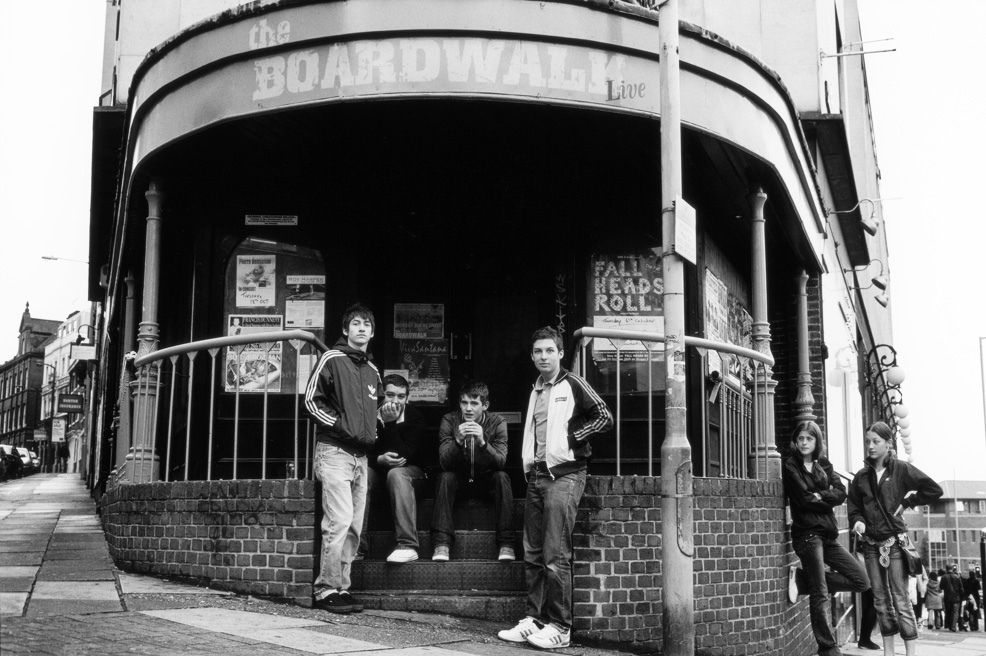
If you’ve read this so far, you’re probably wondering how religious faith and rocknoll could ever coexist. The answer is within the semantics.
The word faith means “a strong belief in a creed of a religion”. Religion is simply a teaching. We all have a creed, doctrine, a set of beliefs we adhere to. Whether it’s personal, political, social, or of a holy religion. Arctic Monkeys’ creed is embedded in their debut album’s title: whatever people say and think of them is not a reflection of who they are.
This creed is felt throughout the lyrics of the album, amplified by their rebellion to remain authentic in a world of posers. It starts off with Kierkegaard’s concept of angst found in The View From The Afternoon which is triggered by Turner’s protagonist’s dissatisfaction with the aesthetic life. The album ends with his self-reflection and acceptance of the weight of his individuality and the finite trap of the snobs, hypocrites, and the bereft around him in A Certain Romance.
Out of the 13 tracks on the album, I’ve categorized the 12 songs on the album into Kierkegaard’s three stages of life, except for one, The View from the Afternoon.
THE VIEW FROM THE AFTERNOON
“Anticipation has the habit to set you up, for disappointment”
The album kicks off with a jolt of anxiety which is why I couldn’t categorize it as one singular Kierkegaardian stage. Angst for Kierkegaard is a product of decision making, a weight of responsibility. It’s felt later on, past the aesthetic and ethical stage as a result of self awareness and reflection. I believe this opening track embodies all stages of life according to Kierkegaard’s theories.
I want to see all of the things that we’ve already seen
Turner’s inner dialogue represents the prototype of the Kierkegaardian man. He’s preparing for a night out. A night of hedonistic familiarities he’s grown bored of. He paints an unfulfilling picture of a predictable night ahead and navigates us through the highs and lows of it.
And she won’t be surprised, and she won’t be shocked
When she’s pressed the star after she’s pressed unlock
And there’s verse and chapter sat in her inbox
And all that it says is that you’ve drank a lot
And you should bear that in mind tonight
Regardless of his struggle to let go of the pleasure seeking stage, he poses ethical questions of himself. Turner represents the infinite population riddled with angst due to their awareness of the illusions they live in. There is a warning embedded in the lyric he repeats to himself, “you should bear that in mind”. He knows the outcome of his actions, understands the disappointment of living for the moment, and is well aware of himself, regardless of the mistakes he’s bound to make. He’s committed to a leap of faith, no matter its effectiveness.
While writing this article I stumbled onto this statement from Alex Turner that gave my theory credibility because I find this song embodies all stages of life discussed, even though it’s the first track on the album. I found its placement with the other songs peculiar. Here is what Turner said:
“This is one of the last songs written for the album. It’s nothing clever, it’s just about anticipating the evening, finding comfort in familiarity and the fact that you know you’re about to send daft messages or something before the sun comes up. I think I’ve stopped doing that now”.
And with that attestation, here are the Kierkegaardian parallels I found throughout the album categorized into the three stages.
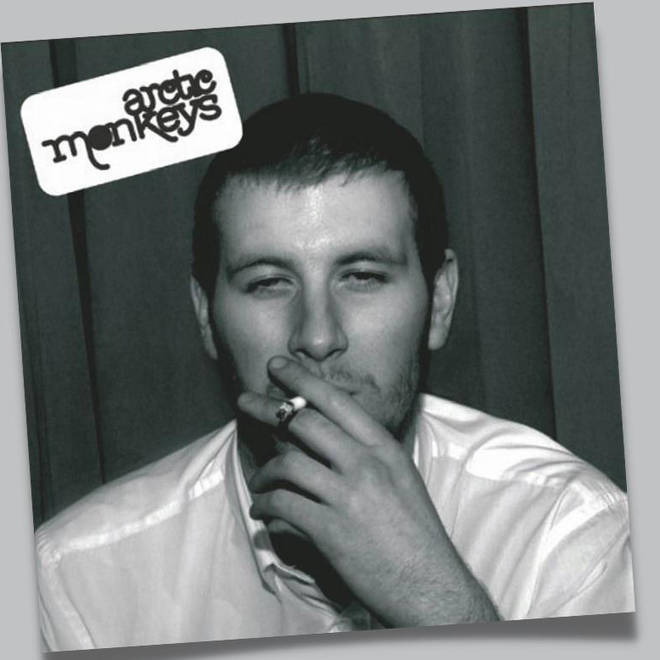
Stage 1: The Aesthetic
DANCING SHOES
A perfect example of the aesthetic stage. Turner is embracing the moment and causal courtship rituals:
And some might exchange a glance
But keep pretending to dance
Don’t act like it’s not happening
As if it’s impolite
To go and mention your name
It’s a clear example of Kierkegaard’s “elskov” love, driven by lust and pure pleasure.
Instead you’ll just do the same as they all do and hope for the best
He’s giving into the finite method of thinking and disregarding change or any form of moral ascension. It may sound like a leap of faith, but the outcome of this decision is aimed at satisfying a primal urge, not a higher consciousness. This is confirmed in the chorus:
The only reason that you came
So what you scared for?
Well, don’t you always do the same?
It’s what you’re there for, but no
STILL TAKE YOU HOME
The message of this song is loud and clear, as conveyed in the title and the unforgiving chorus:
Oh, you know nothing
Yeah, but I’ll still take you home
Oh, yeah, I’ll still take you home
Even though there is an indication of struggle in the opening inner dialogue and a critique of the love interest he’s pursuing, it’s still aimed at pleasure seeking.
Oh, well, it’s ever so funny
‘Cause I don’t think you’re special, I don’t think you’re cool
You’re just probably alright, but under these lights you look beautiful
And I’m struggling, I can’t see through your fake tan
Yeah, and you know it for a fact that everybody’s eating out of your hands
The duality of inner dialogue, vanity, criticism, and mockery is found in the other two verses. He uses words like “tarted up”, “fad”, and “Topshop princess” to further highlight his awareness of her value to him. The song is the height of oafish male behaviour. It’s nothing more than an erotic infatuation to feed his ego, which is illustrated in lines like:
Yeah, and surprisingly you have forgotten my name
But you know it, yeah, you knew it all along
Oh, and you say you have forgotten, but you’re fibbing, go on, tell me I’m wrong.
And my personal favourite and revealing closing line:
Oh, ’cause everybody’s looking, you’ve got control of everyone’s eyes including mine
RED LIGHT INDICATES DOORS ARE SECURED
Much like From The Ritz to The Rubble, this song is the highlight reel of a drunken night out. Complete with a male’s fragile ego, overhead conversations, inebriated fighting, the sexual allure of the opposite sex, complete with that hazy taxi ride home.
Well calm down, temper, temper
You shouldn’t get so annoyed
Well, you’re acting like a silly little boy
And they wanted to be men
And do some fighting in the street
They said “no surrender”
I did sense a slight departure from the temptation of the aesthetic life, and a turn to the ethical in this song which is why I placed it last in this category. Lyrically the shift from the aesthetic to the ethical is found in the first verse:
He coulda just told us no though
He didn’t have to be rude
I view this as an ethical critique towards the bouncer. Turner is giving us an observation of the authoritative abuse of power.
And I didn’t want to leave
I said it’s high green mate
Via Hillsborough please
This verse illustrates a sense of responsibility. The turnaround and walking away from the familiar. The nod to High Green represents the authentic self and Kierkegaard’s aligning core theme of subjective truth and experience. Arctic Monkeys’ root heritage and identity is a common theme supporting the creed of the album.
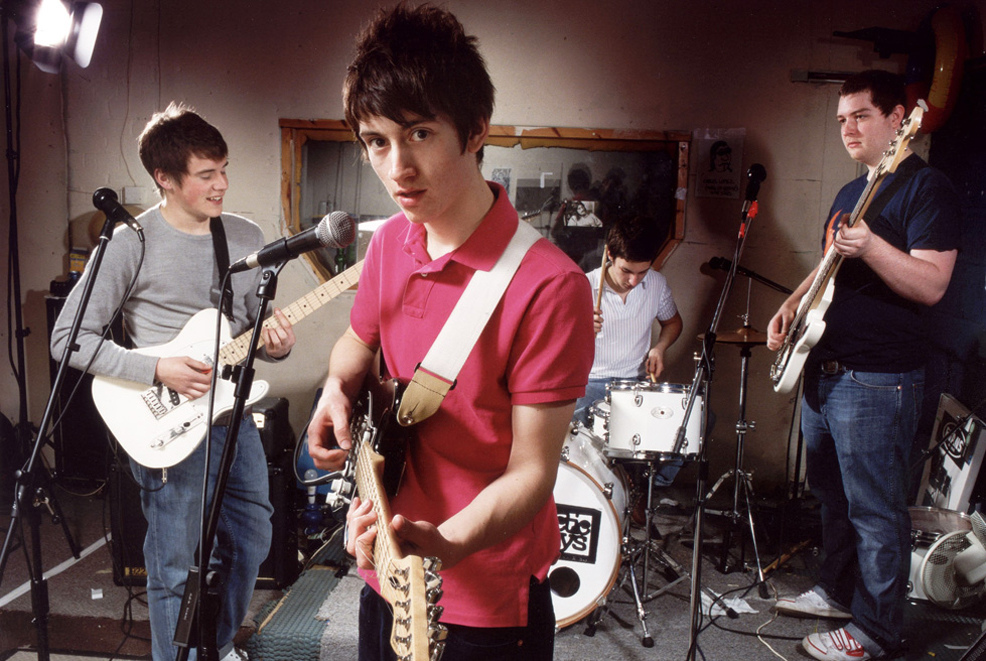
Stage 2: The Ethical
RIOT VAN
The reason I placed this song first in this category is due to its gradual transition from the aesthetic stage onto this higher realm. The melodic lullaby of this song contradicts the grit reality of the youth culture Turner describes in his lyrics. It’s a statement on the exhilaration of rebellion. An homage to the mavericks.
Got a chase last night
From men with truncheons dressed in hats
We didn’t do that much wrong
Still ran away though, for the laugh
Just for the laugh
Kierkegaard also rejected authoritative figures and their objective limited truths, yet believed in the self regulation evoked by the collective social norms. Turner’s social observations are found in lyrics such as:
“Have you been drinking, son?
You don’t look old enough to me”
“I’m sorry, officer, is there a certain age you’re supposed to be?
‘Cause nobody told me”
There is a moment of acceptance in the last verse. Turner’s protagonist accepts the fate and inevitable consequence of his own actions:
Thrown in the riot van
And all the coppers kicked him in
This is further asserted in the last two lines of the song.
And there was no way he could win
Just had to take it on the chin
The protagonist here represents Kierkegaard’s finite thinker, a polar opposite of Turner’s angst riddled frustration expressed in The View From The Afternoon. And although he’s accepting his finite predicament, the back and forth in narration evokes a sense of discernment. You can sense his gradual growth and maturity.
I BET YOU LOOK GOOD ON THE DANCE FLOOR
Ah! Turner’s magnum opus. As the band’s debut single, I genuinely believe this song is Arctic Monkeys’ key to unlocking the language of the youth. And from a Kierkegaardian analytical perspective, it’s easy to understand why it touched onto a demographic starved for validation yet allergic to the ingredients. It’s the oldest story in the book: “she loves me, she loves me not”.
Stop making the eyes at me
I’ll stop making my eyes at you
What it is that surprises me is
That I don’t really want you to
The push and pull between Turner’s protagonist and the love interest isn’t reflective of Kierkegaard’s elskov lustful attraction. Despite the love interest’s “frozen shoulders”, her “ignoring him”, and the slight peek of the sexual urgency he finds in the momentary cry of “there ain’t not love” and “dreams of naughtiness”, I truly and confidently believe this song exudes interest beyond the dance floor.
I bet that you look good on the dance floor
I don’t know if you’re looking for romance or
I don’t know what you’re looking for
The “despair” he finds in the unknown rejects his ego displayed in the vacuous lyrics of Still Take You Home. This leads me to believe this song is an example of Kierkegaard’s kaerlighed love. Notwithstanding the lyrics, Turner is approaching his love interest with a sense of earnestness.
FAKE TALES OF SAN FRANCISCO
Although it’s an observational critique and rejection of the “poser culture”, Turner’s frustration is delivered through witty nuanced expressions:
And there’s a super cool band, yeah
With their trilbies and their glasses of white wine
And all the weekend rockstars are in the toilets
Practicing their lines
Turner once explained, “the easiest way to describe this song is as the sound of us getting annoyed at people pretending. Another way to put it would be us when given something to whine about – depends how profound you want it to sound.”
The sheer visceral contemptuousness and the social commentary of the smug singers displaying their lack of authenticity, masked and glorified by fake tales, is reminiscent of Kierkegaard’s quote on laughter.
He talks of San Francisco, he’s from Hunter’s Bar
I don’t quite know the distance, but I’m sure that’s far
Yeah, I’m sure it’s pretty far
And, yeah, I’d love to tell you all my problem
You’re not from New York City, you’re from Rotherham
So get off the bandwagon, and put down the handbook
Decamping from the aesthetic, Turner’s lyrics showcase his worldly awareness. This confidence is later mirrored in Perhaps Vampires Is A Bit Strong, but.
YOU PROBABLY COULDN’T SEE FOR THE LIGHTS BUT YOU WERE STARING STRAIGHT AT ME
I struggled with this song. On one hand I believe it is a blatantly narcissistic duel over a potential one night stand. The emotions expressed in “forming expressions on their stupid faces”, signals a sexual attraction and also sets the morose tone of Turner’s arrogant protagonist throughout the album. This competitive need to win her is found in “they don’t want to say hello, like I want to say hello”
On the other hand, the theme of anxiety and insecurity evokes introspection in the protagonist.
And I’m talking gibberish
Tip of the tongue but I can’t deliver it properly
He’s mocking the mating rituals, the conventions of the vain attempting to make her smile for their own validation.
Everybody’s tryna crack the jokes and that
To make you smile
Those that claim that they’re not showing off
Are drowning in denial
Yet, he sees himself as part of the equation, regardless of his ego leaking throughout the song trying to convince him otherwise.
But they’re not half as bad as me
Say anything and I’ll agree
‘Cause when it comes to acting up
I’m sure I could write the book”
Turner’s self depreciation throughout this song fueled by his anxious inner dialogue, perfectly align and embody Kierkegaard’s ethical stage.
MARDY BUM
Kierkegaard gives us two kinds of love: kaerlighed and elskov. Mardy Bum is the anthem of kaerlighed, which is a Christian love. In simpler non religious words, loving another despite their difficult traits.
Oh, there’s a very pleasant side to you
A side I much prefer
Oh, but it’s right hard to remember that
On a day like today
Even though he finds her grumpy, argumentative, and difficult to deal with, he’s not running off but rather loving her unconditionally.
When you’re all argumentative
And you’ve got the face on
Turner then displays an outburst of worry, angst.
And I can’t be arsed to carry on in this debate
That reoccurs oh when you say I don’t care
But of course I do, yeah, I clearly do
Regardless, he channels that anxiety provoked through their quarrel to reconcile. And it’s no wonder this song has gained popularity across the fandom. It’s a straight forward song of a lover’s quarrel over the mundane. Turner’s ability to relate to others reveals his personal kaerlighed.
WHEN THE SUN GOES DOWN
A surprisingly dark turn from I Bet You Look Good On The Dance Floor, Arctic Monkeys chose When The Sun Goes Down for the second single debut. Turner’s protagonist gives us a peek into the grim reality of drug use and prostitution in Sheffield.
So who’s that girl there?
I wonder what went wrong
So that she had to roam the streets
Derived from reality, the band actually encountered the referenced “scummy man” (a pimp in this song) outside of their rehearsal space.
And what a scummy man
Just give him half a chance
I bet he’ll rob you if he can
Can see it in his eyes, yeah
That he’s got a driving ban
Amongst some other offenses
Parallel to Kierkegaard’s view of authoritative figures and corrupt elite, Turner’s protagonist makes a statement on the values of the “scummy man”. He holds the man accountable for his seedy actions.
They’re all infected but he’ll be alright
I chose this song as the departure from the ethical stage, ascending into the final and religious level of existence, due to the prominent kaerlighed love conveyed by Turner towards the prostitute. It’s identical to the Christ love Kierkegaard hopes we all strive towards.
And she’s delighted when she sees him
Pulling in and giving her the eye
Because she must be fucking freezing
Scantily clad beneath the clear night sky
Following in Kierkegaard’s beliefs of subjective truth, accountable actions, and experiences, Turner turns to the listener and states, “I hope you’re not involved at all”. This takes us to the final stage of being and existence.
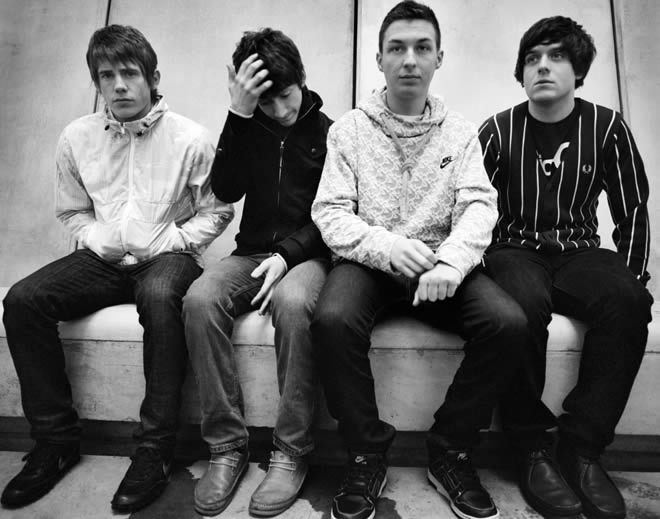
Stage 3: The Religious
PERHAPS VAMPIRES IS A BIT STRONG BUT…
Turner’s cathartic release and my personal favourite song.
Earlier I claimed Arctic Monkeys’ creed is embedded in their debut album’s title: whatever people say and think of them is not a reflection of who they are. And I believe the message is strongly heard in the lyrics and felt in the crashing symbols of Helder’s drums.
Well, I ain’t got no dollar signs in my eyes
That might be a surprise but it’s true
Said, “I’m not like you and I don’t want your advice
Or your praise or to move in the ways you do and I never will”
This is an example of Kierkegaard’s “Knight of Faith”, a person in the final stage of existence who takes a leap of faith sacrificing the aesthetic stage and the paradox of the ethical, trusting in a creed or a set of beliefs. Turner’s “going against the grain” theme isn’t simply an act of rebellion. It’s a calculated and strongly held conviction of the band’s true identity. And he doesn’t wander from his convictions:
‘Cause all you people are vampires
And all your stories are stale
And though you pretend to stand by us
I know you’re certain we’ll fail
These lyrics indicate the band’s egress from not only the usual crowd they’ve encountered in Sheffield, but of the industry’s objective doctrine. Turner’s ire is the Kierkegaardian man’s angst riddled individual taking a leap of faith into his true self while living the human experience. He is existing subjectively, disregarding the “logical” objections of finite thinkers.
FROM THE RITZ TO THE RUBBLE
“when I opened my eyes and saw the real world, I began to laugh and I haven’t stopped since” – Kierkegaard
I chose this track as the title for this article because of the strong parallel I found in both Turner’s message and Kierkegaard’s teaching. Personally I love the placement of this track on the record. It’s the final emotional push against the norms before the grand finale and peaceful acceptance of one’s identity felt in A Certain Romance.
Turner bellows this exasperation louder in this song. He is not faltering from the band’s creed. And although on the surface the opening verse echoes a night of squabbles with bouncers, the last word “totalitarian” concurs the Kierkegaardian views on the authority of the church which he rebuffed. Kierkegaard’s theme of certitude, responsibility, and faith is strongly felt here:
Well, I’m so glad they turned us all away
We’ll put it down to fate
The social commentary of the smug, the “phony” and those seeking to fill a visceral tenet, their boredom and void with a fleeting moment of glorified adrenaline is echoed in Turner’s observation of the party goers:
Why can’t they be pleasant? Why can’t they have a laugh?
He’s got his hand in your chest, he wants to give you a duff
Well, secretly I think they want you all to kick off
They want arms flying everywhere and bottles as well
It’s just something to talk about, a story to tell, yeah
With the “haze ascending”, Turner steps away from the comical, cryptic, and angst. This clarity mirrors Kierkegaard’s peace within the heavy burden of choice. Which leads me to the final song on the album:
A CERTAIN ROMANCE
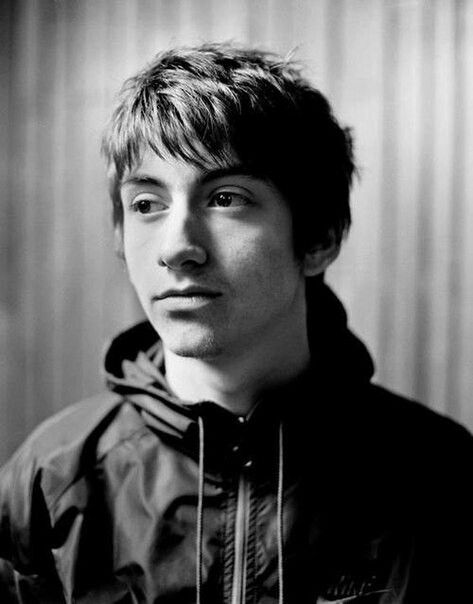
Where the album kicks off with the bellowing The View From The Afternoon, the anthem of anxiety, criticism, and a struggle to depart from the hedonism of the aesthetic, A Certain Romance ends the album with Turner’s calmer self reflection.
Kierkegaard would undoubtedly approve of Turner’s findings. The philosopher was known to provoke. His quarrel with a satire magazine landed him into years of ridicule. He isolated himself and reflected back on his theories without straying from his principals. Much like the progression of this album. Right from the start of this song, Turner gives us the idiom “it went over their heads” with this verse:
…But all of that’s what the point is not
The point’s that there ain’t no romance around there
Whereas he approached the previous songs with the ruthless back of his hand, here Turner is sitting in his Sheffield home, lifting the curtains over his foggy window, wiping away the condensation, to reveal his now solemn observation of the youth culture. He makes peace with the finite thinkers, exercising Kierkegaard’s kaerlighed love. He tries to understand their lack of judgment and their attachment to the aesthetics:
They’ll never listen
Because their minds are made up
And course it’s all okay to carry on that way
He understands, in this final stage of existence, how a life of pleasure seeking doesn’t suffice. And much like Kierkegaard, he is assuring the audience of his apprehension.
And ‘course it’s all okay to carry on that way
But I said no, oh no
Well, you won’t get me to go
Not anywhere, not anywhere
Simply put, Turner is reciting the motto of his creed. He’s holding onto his set of beliefs regardless of the status quo, or the fear of missing out. He is willing to sacrifice a night lacking substance to fill a momentary boredom. Although his views of the crowd has softened:
Well, over there, there’s friends of mine
What can I say? I’ve known ’em for a long long time
And, yeah, they might overstep the line
But you just cannot get angry in the same way
He is leaving them to their own discernment while holding himself accountable for the set of beliefs he’s found in the creed of the album’s title.
No, not in the same way
Said, not in the same way
Oh no, oh no no
I believe Turner finds peace in his detachment of the aesthetic. His introspection leads him to accept his new stage of life will not align with his previous methods of conduct. And I think it makes him happier.
–
Kierkegaard stands outside the pubs. He turns to a crowd of men smoking in the alleyway. He recognizes his smug critics. With a mischievous smile he approaches them, one notices and rolls his eyes. “Not tonight Soren..” he protests towards the smirking philosopher.
With a sigh of personal contentment, Kierkegaard tips his hat and retreats to his quiet home leaving his critics to their night of hedonism.
Soren Kierkegaard smiles to himself hearing the critics gossiping behind him. He understands with absolute certainty that whatever is said of him, is not who he is.
 SPANGLED CAVERN
I just find amazing how you manage to connect Alex Turner’s lyrics with philosophy. I’m also a big fan and always loved his lyrics, but you insights made me appreciate it even more. I always thought their debut was stellar and such a great example of world building, but I think I love it even more now. Your work is also stellar!
Ps: I love that black and white photo of Alex below A Certain Romance, so so beautiful
LikeLiked by 1 person
Thank you with all my heart. Truly. Thank you for taking the time to also write me. I’m still learning and picking up new perspectives whenever I listen to the album again. All I ever dreamt of as a fan was exactly this sort of interaction where I’ll find someone who can share a different outlook beyond the surface. It’s beautiful because it connects us.
Oh I love that picture and it’s the only one I couldn’t find the photographer to tag! I found it fitting to have it towards the final stage of introspection because of how his eyes look.
Thank you so much !
LikeLike
“All I ever dreamt of as a fan was exactly this sort of interaction where I’ll find someone who can share a different outlook beyond the surface. It’s beautiful because it connects us.” I always look forward to this everytime I meet someone that is as much fan of AM as I am and your blog is just the perfect place for that. By the way, I love the fact you named it “spangled cavern” because The Hellcat Spangled Shalalala is my second favorite am song and it also suits the whole decoding Turner’s lyrics very well.
LikeLike