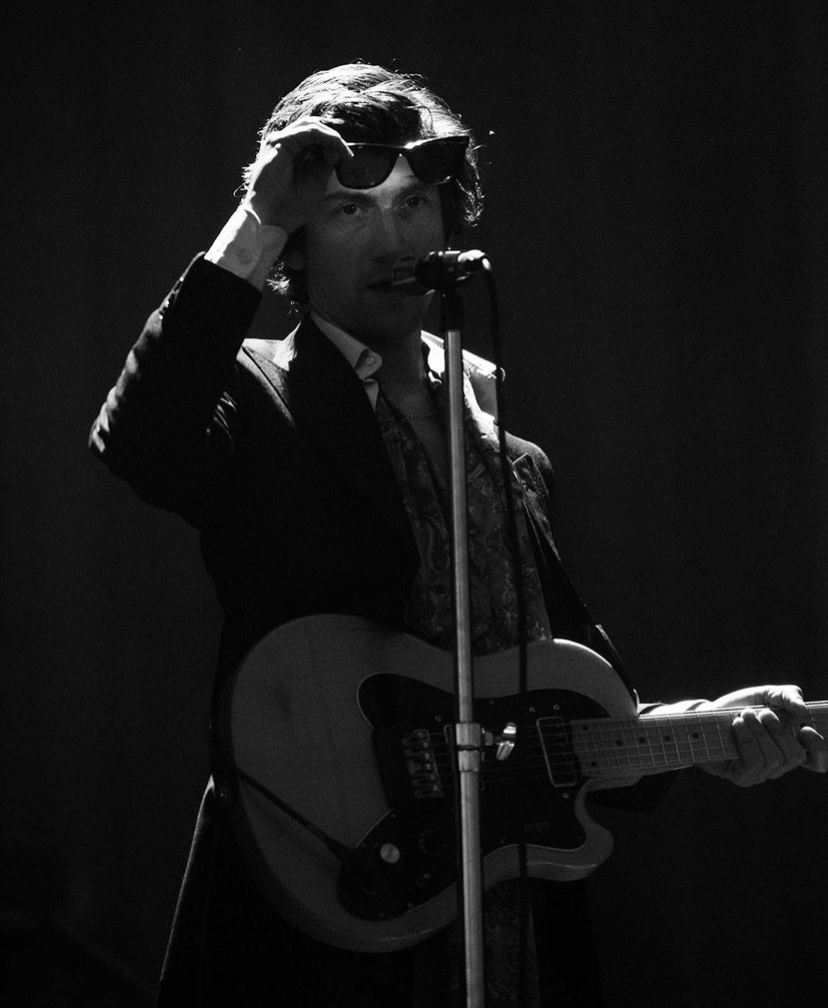
“In 2019, as he began working on The Car, Turner was reading a lot of Raymond Chandler books and stepping into the mind of the author’s most famous character, the private eye Philip Marlowe” – Flood Magazine
I’ve theorized endlessly through the pandemic about this theme, but with this confirmation, I want to dive deeper.
Only in my wildest dreams could the worlds of Raymond Chandler and Alex Turner collide. And thanks to André Breton’s surrealist manifesto, my psychic automatism is the GPS to dreams fulfilled.
Enter the Neo-noir album. The strings acting as leitmotifs, intentionally building a quintessential cinematic narrative for the new era. The overall theme paints a picture of a protagonist, behind the wheel, driving through the ironic fictional rain of grimy LA.
His signature fedora replaced by a modern equivalent, the iconic Ray-ban Wayfarer. Intentionally masking his vulnerability behind a costume he’s set on keeping on.
Just like its predecessors, Tranquility Base Hotel and Casino, and the AM album, The Car picked up a new set of characters along the way.
We’ve met the Steve McQueen character cloaked in brown leather, hiding behind his cool shades. We were then introduced to the Mechanic with his signature green jacket and a fitting gimmick to the album’s title. And now, with a sharp fitted blazer and a silk scarf, the costume change signals a new character, his own version of Philip Marlowe.
And I do believe this one will be this era’s paradigm.

I’ve touched on the film noir movement in an older post. To summarize, noir films were inspired by pulp fiction (hardboiled fiction). The films were a reaction to the societal damage and emotional carnage the Great Depression left behind.
The protagonists of those novels were antiheroes, and no longer wore capes. They fought organized crime during the prohibition years. Corruption was deeply rooted in the holy trinity beacon of light designated to guide society’s moral compass: cops, clergy, and politicians.
Noir protagonists not only held strong convictions in their fight against these united dark forces, but also against the lure of femme fatales. They were lone wolves, nihilists, and cynical.
The characters reflected the ignored yet true nature of men returning home from the war. For so long, their dark and gritty reality was laced with patriotism. They left to war with a sense of belonging and national pride. Returning home, they faced isolation and an existential crisis, leaning on unhealthy crutches.
Philip Marlowe was a recurring protagonist in Chandler’s books. He drank Old Forester Bourbon, chain smoked Camels, and referred to himself as Marlowe.
Not only was he the archetype of this genre, but also an obvious reflection of Chandler. I truly believe Chandler, who was plagued by alcoholism, found atonement in Marlowe.
The eternal bachelor, Marlowe is flawed in his cynical views and unhealthy habits. But he is also philosophical, plays chess, enjoys poetry, and fights crime. Marlowe was an alter ego to channel through his own vulnerabilities.
Now look at The Car. The melodies, the strings, the cinematic theme, all louder than the lyrics. The personas Turner creates on stage, act as a plot device for the main theme of the album which to me, is summarized perfectly in the lyrics of I Ain’t Quite Where I Think I Am:
Isolation. Even the cover of the album meets the requirements of noir characteristics. Claustrophobic frames to express tension and confusion, use of shadows to set an ominous feeling in an urban jungle, and of course the mystery of the abandoned car as a vision of isolation and loneliness. And all those themes were found in I Ain’t Quite Where I Think I Am.
I found it peculiar they kicked off their tour with that song as an introduction to the new sound. The funky guitar riffs, and the red herring (the Mirrorball on stage), made me believe the new album would take us back into the 70s. In a way it did, with themes of surveillance (watergate scandal) I touched on in the Body Paint article. Yet it doesn’t sound like the rest of the album. Elements of it can be found in Jet Skis On the Moat, and Hello You, but it doesn’t define the sound of the album.
I also believe the opening line of There’d Better Be A Mirrorball, sets the tone for his own Philip Marlowe persona. It’s his reaction to whatever unfolded in 2019 to make him vulnerable, his reaction to his own external reality.
Mr. Schwartz, and Big Ideas are the noir anthems. And just like Marlowe, he’s speaking in third person, even going as far as giving his character a name. And personally, after our own version of the Great Depression and literal isolation (the pandemic), these songs are the definition of an identity crisis. Even though they read like his alter ego’s journal entries, the internal dialogue of the characters serve as a universal soundboard echoing the last few years.
And just like Chandler, he finds atonement in Body Paint. Dodging the lure of the femme fatale. I won’t reiterate. I’ve written a lyrical analysis of that song which you can find on my site.
I once read that it’s best to understand Noir, by feeling it. We are currently living through yet another period of recession pop. A lot of the current chart-topping artists released feel-good escapist anthems to sweep the last few years under the rug. I have to admit though, that formula has lost its luster. We’ve been here before.
What we need now is to feel. To question what is real. We need the cynical antihero. This album continues to surprise me. I continue to feel a surge of emotions every time I play it, emotions that were stagnant for years.
Philip Marlowe said, “I may break a few rules, but I break them in your favour.” This album broke a few rules. And I know the fans are divided over the new sound claiming it’s not rock’n roll. But as someone who’s only two years older than Turner and who lived out each album at the time of its release and was able to relate to every timeline alongside the band, I believe Arctic Monkeys breaking the rules and making The Car, is so fucking rock’n roll.
photo credits: Emi Castro and Facu Suarez
 SPANGLED CAVERN
So well written, and I always enjoy your analysis ❤️
LikeLike
Ahhhh thank you for finding me and reading this!!! I appreciate you and your time ❤️
LikeLike